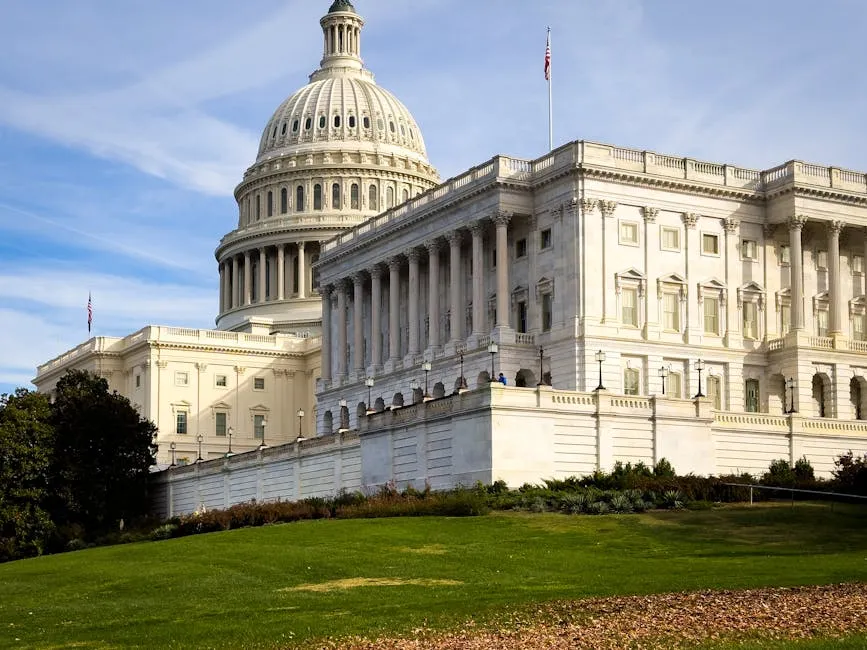
Washington, D.C. — The Complete City Guide 2026
The federal capital, four Washingtons sharing one district, and the largest free-museum complex in the world. 17 Smithsonian museums on a single mile of grass, the Lincoln–Capitol monument axis, the working post-2010 fine-dining scene (26 Michelin stars in the 2026 guide), and the honest 2026 version of what’s worth a visit under the second Trump administration.
Why Washington, D.C.? An Editor’s Note
On the long granite landing at the top of the Lincoln Memorial steps, set into the eighteenth step from the top, is a small inscribed plaque: “I HAVE A DREAM — Martin Luther King, Jr. — The March on Washington for Jobs and Freedom — August 28, 1963.” The plaque marks the spot where King delivered the speech to a crowd of approximately 250,000 people gathered along the Reflecting Pool below. Stand on that step and look east. The view runs the National Mall — Lincoln Memorial behind you, the Reflecting Pool, the World War II Memorial, the 555-foot Washington Monument, the long axis of grass and trees, the dome of the United States Capitol a mile and three-quarters away. This is the symbolic spine of American democracy and the most-photographed sightline in the United States. It is also a working civic-ritual stage: more than 30 million people visit the Mall annually, the area is the working backdrop for presidential inaugurations, July 4 fireworks, civil-rights anniversaries, protests of every political stripe, and the daily class-trip-and-camera tourism that defines the city’s visitor experience.
What makes Washington different from any other capital is that this view is genuinely available — the Mall is a public park, entry is free, the monuments are open extended hours (Lincoln, MLK, FDR, Vietnam Veterans, World War II, Korean War Veterans are all 24/7 free-access), and the Smithsonian Institution operates seventeen free museums along and near the Mall, all open daily (almost all closed only on 25 December). This is not the European capital model where the symbolic monuments cost money and the museums cost more. The United States, for reasons embedded in the 1846 founding of the Smithsonian by an act of Congress and the 1791 L’Enfant plan for the city, made its national symbolic capital free at the point of use. Most foreign visitors do not internalise this until they have been here for two days.
Washington is best read as four cities sharing one federal district.
The first is Federal/Monumental Washington — the National Mall and the central axis of the city, with the Capitol at the east end, the Lincoln Memorial at the west, the White House on the north side of the Ellipse, the Tidal Basin with the Jefferson Memorial and the Martin Luther King, Jr. Memorial (opened 2011), the Smithsonian complex of seventeen museums and the National Zoo, and the federal buildings (Treasury, State, Interior, the multi-block Federal Triangle) along Pennsylvania Avenue. This is the visitor’s Washington — what most short-stay travellers see, and what they leave talking about.
The second is Residential Washington — the actual working city of approximately 700,000 residents (the population of the District of Columbia itself, distinct from the much larger metropolitan area). The city is roughly 43% non-Hispanic Black per the 2020 census, with the historical residential base concentrated east of Rock Creek Park and east of the Anacostia River. The defining neighborhoods of working DC — Adams Morgan (the embassy-and-restaurant strip), Shaw (the historical centre of Black DC business and cultural life, with the Howard University campus, the U Street corridor that hosted Duke Ellington and the working pre-1968 Black-American jazz scene), Capitol Hill (the residential neighborhood east of the Capitol, brownstones, Eastern Market), Georgetown (the older 18th-century neighborhood, university, the working DC luxury-retail strip), Dupont Circle (the embassy-and-old-money quarter), Anacostia (the historically-redlined district east of the river, the working centre of DC’s post-1968 Black-American political life, the home of the Frederick Douglass National Historic Site) — none of these are on the standard tourist itinerary and all of them are worth a visit beyond the Mall.
The third is Diplomatic Washington — the embassies of nearly 200 countries, the think tanks, the K Street lobbying corridor, the law firms, the consulting firms and the working international-affairs ecosystem that the federal government draws around itself. Embassy Row — Massachusetts Avenue between Dupont Circle and the Naval Observatory — holds approximately 60 embassies and is a working diplomatic strip; visiting the embassies is largely restricted but a slow walk past the buildings is the right introduction to the architectural variety of state-power-display.
The fourth — and this is the layer that most short-stay visitors miss entirely — is Political-Crisis Washington. The city has been the working stage of the United States’ political contests for two centuries, and the 21st century has been particularly visible. The 6 January 2021 attack on the United States Capitol — when a crowd attempting to disrupt the certification of the 2020 presidential election broke through Capitol Police lines and entered the building, with five deaths in the immediate aftermath and the trauma of the day reshaping Capitol security ever since — is still the most-dated event the visitor will see referenced on the working tour-guide circuit. The second Trump administration took office on 20 January 2025; the federal workforce, the immigration policy environment, and the broader political culture of the city are working day-to-day issues. None of this directly disrupts the visitor experience — the museums are open, the monuments are open, the metro runs, the restaurants are full — but the city is conducting national politics at a notably hotter temperature than it was five years ago, and a serious visitor should know that.
Three days is the minimum for the Mall and the Smithsonian. Five days lets you add the residential city (Georgetown, Adams Morgan, Capitol Hill) plus a day trip to Mount Vernon or Annapolis. Seven days is the comfortable framing if you also want to do the FDR Memorial, the African American History and Culture Museum (allow a full day; it deserves the time), and a Library of Congress tour. The city is genuinely walkable along the Mall axis; outside that, the Washington Metro runs the city. The free museums are the country’s most-undervalued cultural-tourism asset; do not undervalue them.
A working 2026 visa note: citizens of the 41 countries in the Visa Waiver Program (most EU member states, UK, Australia, New Zealand, Japan, South Korea, Singapore) can enter the United States visa-free for up to 90 days under the Electronic System for Travel Authorization (ESTA), which costs $40.27 total ($10.27 application + $30 if approved) and is valid for 2 years. The ESTA requires an electronic passport (with embedded chip) and at least 72 hours’ advance application. Non-VWP citizens require a B-1/B-2 visa, processing time and embassy-interview-availability varying substantially by country; allow several months under the second Trump administration’s tightened visa-processing environment.
Getting There — IAD, DCA, BWI and the Trains
Washington is served by three commercial airports plus a working Amtrak rail hub at Union Station.
Washington Dulles International (IAD) is the region’s primary international airport. 26 miles west of downtown Washington in Loudoun County, Virginia. Saarinen’s iconic 1962 terminal building (the swooping concrete-and-glass roof that became one of the architectural set pieces of mid-century American modernism) is still the main terminal, expanded with newer concourses. IAD handles nearly 157 nonstop destinations on around 40 airlines, including direct flights from most major European and Asian hubs (London, Paris, Frankfurt, Amsterdam, Madrid, Munich, Istanbul, Dubai, Doha, Beijing, Seoul, Tokyo, Hong Kong, Mumbai, Delhi, Addis Ababa) plus Ethiopian Airlines’ working East-African hub service.
- Metro Silver Line to downtown: opened to Dulles in November 2022. From the airport’s Silver Line Station (connected to the terminal by a covered walkway) to Metro Center or L’Enfant Plaza downtown is about 55-65 minutes, $6 one-way with a SmarTrip card. The cheapest reliable transfer.
- Taxi/Uber/Lyft: $55-95 to downtown depending on traffic and surge, 40-60 minutes off-peak, 75-90 minutes peak.
- Washington Flyer Coach (Silver Line bus alternative): discontinued since the Silver Line opening.
Ronald Reagan Washington National (DCA) is the most convenient airport for downtown. 4 miles south of the Capitol in Arlington, Virginia, on the west bank of the Potomac. DCA handles domestic flights almost exclusively (the historical “DCA perimeter rule” restricts most flights to 1,250 miles from the airport, with limited exceptions). For an international visitor connecting via a US hub (New York JFK, Atlanta, Chicago O’Hare, Dallas Fort Worth), DCA is usually the inbound airport of choice.
- Metro Blue and Yellow Lines: Reagan National Airport Station is connected to the terminal by a covered walkway. 20 minutes to Metro Center downtown, $2.45 one-way off-peak with a SmarTrip card.
- Taxi/Uber/Lyft: $20-35 to downtown, 15-25 minutes.
Baltimore/Washington International Thurgood Marshall (BWI) is the third option, 32 miles north-east of downtown in Maryland. BWI handles substantial Southwest Airlines and other low-cost-carrier traffic; international flights are present but less dense than IAD. MARC commuter rail and Amtrak trains from BWI Rail Station (a 5-minute shuttle from the terminal) reach Washington Union Station in 30-45 minutes for $7-50 depending on service.
Amtrak and Union Station
Union Station on Massachusetts Avenue is the city’s working rail hub. The 1907 Beaux-Arts main hall is itself a working visitor attraction (free, open daily) and is the terminus for:
- Amtrak Northeast Corridor to Baltimore, Philadelphia, New York Penn Station (3 hours), Boston (6.5 hours). The high-speed Acela service runs the same route at a premium.
- Amtrak long-distance services to Chicago, New Orleans, Miami, and other US destinations.
- MARC commuter rail to Baltimore and Maryland suburbs.
- VRE commuter rail to Virginia suburbs.
- Greyhound and Megabus intercity bus services.
- Metro Red Line connection to the rest of the city.
For visitors from New York, Boston or Philadelphia, Amtrak Acela to Washington is materially more pleasant than flying — city-centre to city-centre, no airport-security ordeal, comfortable seating, working WiFi. The Acela New York → Washington is 2 hours 50 minutes; the regional service is 3 hours 25 minutes.
From the airports — practical
- From IAD: Silver Line Metro is the right choice for most visitors. The 55-65-minute ride is straightforward; SmarTrip card available from vending machines at the airport station ($2 card + load).
- From DCA: Blue/Yellow Line Metro. The terminal-to-station walk is genuinely 5 minutes; trains every 4-8 minutes most of the day.
- From BWI: Amtrak Northeast Regional to Union Station ($15-35) or MARC (cheaper, weekday-only commuter schedule) is the right answer. Shuttle bus from terminal to BWI Rail Station every 25 minutes.
Editor’s tip: The Metro is the right answer for all three airports unless you have heavy luggage, a tight connection, or are arriving past midnight (the system shuts at midnight Sun-Thu, 1am Fri-Sat). Uber/Lyft surge at IAD on Sunday evenings is real (the federal-worker weekend-return crowd); allow 90 minutes of buffer if you have a connecting flight on a Sunday night.
Pro Tip: Get a SmarTrip card at any Metro station for $2 plus the load. The card runs Metro, bus, and the airport rail connections. Apple Pay and Google Pay also work on the Metro fare gates as of 2024 — use your phone if you do not want a physical card.
Top 12 Attractions in Washington, D.C.
A first-time visitor should structure the trip around the National Mall — three full days will not exhaust it. Five days lets you add the city’s outer neighborhoods (Georgetown, Adams Morgan, Capitol Hill) and one day-trip (Mount Vernon, Annapolis, Harpers Ferry).
1. The National Mall
The two-mile linear park running west-to-east from the Lincoln Memorial to the Capitol. Operated by the National Park Service; free, open 24 hours, with monuments individually staffed by NPS rangers from approximately 09:30 to 22:00 daily. The Mall is the working visitor anchor and is where most visitors spend their first day.
Monuments along or just off the Mall:
- Lincoln Memorial (west end) — 1922 Henry Bacon Beaux-Arts structure; the seated Lincoln by Daniel Chester French is 19 feet tall and the most-photographed statue in the United States. The “I Have a Dream” plaque is on the eighteenth step from the top.
- Vietnam Veterans Memorial (north of the Reflecting Pool) — Maya Lin’s 1982 black-granite wall inscribed with the names of the 58,318 US service members killed in the Vietnam War, in the order they were killed. The most-visited single memorial on the Mall.
- Korean War Veterans Memorial — 1995; 19 stainless-steel statues of soldiers on patrol.
- World War II Memorial — 2004; the most recent of the major monuments, centered on a granite plaza between the Lincoln Memorial and the Washington Monument.
- Martin Luther King, Jr. Memorial (West Potomac Park) — 2011; the 30-foot granite “Stone of Hope” statue by sculptor Lei Yixin.
- Franklin Delano Roosevelt Memorial (West Potomac Park) — 1997; a 7.5-acre walking-tour memorial spanning FDR’s four presidential terms.
- Thomas Jefferson Memorial (south side of the Tidal Basin) — 1943; the Pantheon-inspired domed memorial, the second-most-photographed at cherry-blossom season.
-
Washington Monument — 555-foot obelisk, the tallest stone-built structure in the world per the Park Service. The observation deck on the top is open by free timed-entry ticket, reserve at recreation.gov 30 days in advance; same-day tickets released at 10:00.
-
Hours: All monuments outdoor-accessible 24/7; staffed visitor centers 09:30-22:00.
- Entry: All free.
- Access: Smithsonian Metro Station (Blue/Orange/Silver Lines) is the central Mall stop.
Editor’s tip: Walk the Mall westward from the Capitol to the Lincoln Memorial at sunset (start around 18:30 in summer, 16:00 in winter). The two-mile walk takes about an hour at monument-stopping pace; the cumulative effect of seeing the working monuments in sequence at the end of the day is the most concentrated American-symbolism experience available anywhere.
2. The Smithsonian — All Seventeen Museums
The Smithsonian Institution operates seventeen free museums and the National Zoo, of which roughly half are on or near the National Mall and the rest are in central Washington or nearby. All free; most open 10:00-17:30 daily; closed 25 December. The defining anchors:
- National Museum of Natural History — the dinosaur halls, the Hope Diamond, the Sant Ocean Hall, the working evolution and human-origins exhibits. The most-visited museum in the system.
- National Museum of American History — the Star-Spangled Banner (the original flag that inspired the national anthem), the working presidency-and-popular-culture exhibits, the working America-on-the-move transportation hall.
- National Air and Space Museum — currently in multi-year renovation; reopening galleries phased through 2026. The Steven F. Udvar-Hazy Center at Dulles Airport is the satellite annex that holds the Space Shuttle Discovery, the SR-71 Blackbird, and the Enola Gay. Currently the better visit for serious aviation interest.
- National Museum of African American History and Culture — opened September 2016; the working anchor for the country’s reckoning with its Black-American history from the trans-Atlantic slave trade through the present. Allow a full day; the building is structured as a downward-spiral history from below to above, and the experience is dense. Free timed-entry passes required; release schedule is 30 days advance + same-day at 08:15.
- National Museum of the American Indian — the curving sandstone building at the east end of the Mall, with the working history of Indigenous peoples of the Americas across the western hemisphere.
- National Gallery of Art (East and West Buildings) — technically not Smithsonian (separate federal trust) but free and on the Mall; the West Building (the classical 1941 marble building) holds the European masters (Leonardo, Vermeer, the Italian Renaissance), the East Building (I.M. Pei’s 1978 modernist wing) holds 20th-century American and European modernism.
- Hirshhorn Museum and Sculpture Garden — the cylindrical concrete building on the Mall, the country’s working contemporary-art Smithsonian anchor.
-
Smithsonian American Art Museum + National Portrait Gallery — paired in the Old Patent Office Building (8th and F Streets NW), holding the working American-art and presidential-portrait collections including the Kehinde Wiley portrait of Barack Obama and the Amy Sherald portrait of Michelle Obama (the post-presidential portraits, on permanent display).
-
Hours: Generally 10:00-17:30 daily; some exceptions for special exhibits.
- Entry: All free. Timed-entry passes required for Air and Space, African American History and Culture, and sometimes the National Zoo at peak periods; reserve at si.edu/visit.
- Access: Smithsonian, L’Enfant Plaza, Federal Triangle, and Archives metro stations cover the Mall museums.
Pro Tip: The Air and Space Museum renovation has changed the working visitor experience substantially. For serious aviation interest, the Udvar-Hazy Center at Dulles is now the primary destination — it holds the Space Shuttle Discovery, the SR-71, the Enola Gay, the F-14 Tomcat, and a working majority of the larger aircraft. Free entry; $15 parking (or take the Silver Line + 35-minute shuttle from Wiehle-Reston East metro station).
3. The United States Capitol
The seat of the US Congress, working since 1800 (the current dome by Thomas Walter dates to 1855-1866). The Capitol Visitor Center (underground, on the east side, opened 2008) is the working visitor entry. Tours are free but require advance reservation; request via your member of Congress (US citizens) or directly through visitthecapitol.gov (international visitors). The walking tour covers the Rotunda, the Old Senate Chamber, the National Statuary Hall, and the Crypt; allow 90 minutes for the full tour plus security screening.
The post-6 January 2021 security regime is still in force in a modified form. The exterior perimeter is more controlled than it was pre-2021; large bags are not permitted; some areas remain restricted. The visitor tour itself is unaffected, but expect a more visible security presence than at most other free US attractions.
- Hours: Capitol Visitor Center 08:30-16:30 Mon-Sat; tours 08:30-15:30.
- Entry: Free; advance booking essential.
- Access: Capitol South Metro (Blue/Orange/Silver) or Union Station (Red).
4. The Library of Congress
The world’s largest library by collection (over 175 million items), in three buildings on Capitol Hill. The Thomas Jefferson Building (1897 Beaux-Arts main building) is the visitor anchor — the Main Reading Room under its 160-foot domed ceiling is one of the great civic spaces in the United States, and the building’s interior decoration (mosaics, allegorical murals, the Gutenberg Bible displayed in a glass case in the Great Hall) is one of the most under-visited free attractions in the city. Tours of the Jefferson Building are free but require advance reservation at loc.gov; independent self-guided visiting of the public spaces is free and does not require advance booking. The library connects to the Capitol via a working underground tunnel; the Capitol-to-Library walk takes 15 minutes through a working network of public corridors.
- Hours: 08:30-17:00 Mon-Sat; closed Sundays.
- Entry: Free; tours by advance reservation at loc.gov.
- Access: Capitol South Metro.
5. The Supreme Court
The country’s working highest court, in a 1935 Cass Gilbert building immediately north-east of the Capitol. The court is in session October through late June (oral arguments roughly Monday-Wednesday, 10:00-12:00, when the court sits); arguments are free to attend but require getting in line at 06:00-07:00 for the limited public seating. Outside session, the building is open to free self-guided tours of the Main Hall, the Courtroom (when not in session), the historical exhibits, and the working architecture-and-civic-symbolism of the building itself.
- Hours: 09:00-16:30 Mon-Fri.
- Entry: Free.
- Access: Capitol South Metro.
6. The White House
The official residence of the President of the United States, on Pennsylvania Avenue between Lafayette Square and the Ellipse. The visiting situation for the White House is the most-restricted of any major Washington attraction. Public tours are available but require:
- For US citizens: Submission of a request through a member of Congress at least 21 days (preferably several months) in advance.
- For non-US citizens: Request through your country’s embassy in Washington at least 21 days in advance; success rates vary substantially by country and political moment.
For most international visitors, the alternative is the White House Visitor Center (1450 Pennsylvania Avenue NW, free, no reservation, 07:30-16:00 daily) which holds working presidential-history exhibits, oval-office reproduction, and several rooms of artefacts. The exterior of the White House is photographable from Lafayette Square (north side) and from the Ellipse (south side, with the Washington Monument behind).
- Hours (Visitor Center): 07:30-16:00 daily.
- Entry: Free; advance tour booking via member of Congress or embassy.
- Access: McPherson Square or Federal Triangle Metro.
7. Arlington National Cemetery
The country’s most-visited military cemetery, across the Potomac in Arlington, Virginia. The cemetery holds the graves of approximately 400,000 service members and their families, including President John F. Kennedy and his immediate family (the eternal flame at the gravesite), President William Howard Taft, Senator Robert F. Kennedy, and the Tomb of the Unknown Soldier with its 24-hour ceremonial guard (the changing-of-the-guard ceremony every half-hour in summer, every hour in winter, is one of the most-photographed military rituals in the country). The cemetery covers 624 acres of rolling hill east of the Pentagon; full walking circuits take 3-4 hours.
- Hours: April-September 08:00-19:00; October-March 08:00-17:00.
- Entry: Free; the optional ANC Tours trolley is $19.50 for adults and is the right choice for visitors with limited time or mobility issues.
- Access: Arlington Cemetery Metro Station (Blue Line).
Pro Tip: The Tomb of the Unknown Soldier changing-of-the-guard happens every half-hour from April 1 to September 30 and every hour from October 1 to March 31. The 09:30 weekday change is the quietest viewing window; the 12:00 weekend change is the most-photographed and most-crowded.
8. United States Holocaust Memorial Museum
Opened 1993, on Raoul Wallenberg Place SW just south of the Mall. The permanent exhibition covers the Holocaust from 1933 through 1945 across three floors, in a sequence the architect James Ingo Freed designed as a deliberately uncomfortable working pilgrimage through the events. The museum is genuinely heavy and deserves the planning. Allow 3-4 hours for the main exhibit; the museum also holds working temporary exhibits, a children’s exhibit (Daniel’s Story, for younger visitors), and an extensive research library. Free timed-entry tickets are required during March-August and are recommended year-round; reserve at ushmm.org up to 90 days in advance.
- Hours: 10:00-17:30 daily, closed Yom Kippur and 25 December.
- Entry: Free; timed tickets required March-August.
- Access: Smithsonian Metro Station, 5-minute walk.
9. The National Zoo
The Smithsonian’s National Zoological Park, in Rock Creek Park at 3001 Connecticut Avenue NW. 163 acres, home to roughly 2,700 animals across 390 species, free entry (the zoo is the only major US zoo with no admission charge). The historical visitor anchor was the giant panda exhibit; the Chinese-government-on-loan pandas (Mei Xiang, Tian Tian, and their offspring) were returned to China in November 2023 under the expiration of the long-running panda-diplomacy lease. Two new pandas (Bao Li and Qing Bao) arrived in October 2024 under a new 10-year lease and are now the working zoo headline; advance timed-entry tickets are often required during summer and holiday peaks.
- Hours: 08:00-18:00 March-September; 08:00-16:00 October-February; closed 25 December.
- Entry: Free; timed-entry passes required at peak.
- Access: Cleveland Park or Woodley Park Metro Stations (Red Line); 10-minute walk.
10. Frederick Douglass National Historic Site (Cedar Hill)
The home of Frederick Douglass (1818-1895), the abolitionist, orator and statesman who became the most famous African American of the 19th century. Douglass lived at Cedar Hill in the Anacostia neighborhood from 1877 until his death in 1895; the National Park Service has operated the house as a free historic site since the 1970s. The interior preserves Douglass’s working library (his personal collection of approximately 2,000 books), his desk, and the working domestic life of a 19th-century Black-American intellectual. The site is in Anacostia (east of the Anacostia River), accessible by Metro plus a 15-minute walk; the neighborhood beyond the historic site is the working post-1968 Black-American DC and is worth a respectful exploration.
- Hours: 09:00-16:30 daily; tours by advance reservation at recreation.gov.
- Entry: Free; ranger-led tours $1 reservation fee.
- Access: Anacostia Metro Station (Green Line) + bus or rideshare.
11. Georgetown
The 18th-century neighborhood that pre-dates the federal city (Georgetown was an established Maryland town when the District of Columbia was carved out around it in 1791). The neighborhood is now the city’s working luxury-retail and restaurant strip, with the C&O Canal towpath, the Old Stone House (the oldest unchanged building in DC, 1765), the Tudor Place historic home, Georgetown University, and the working waterfront at the Georgetown Harbour. M Street and Wisconsin Avenue are the main shopping streets. Georgetown is genuinely walkable end-to-end in an afternoon.
- Access: Foggy Bottom Metro + 15-minute walk; or the Georgetown-Union Station DC Circulator bus; or a 20-minute walk west from the White House.
12. The Kennedy Center for the Performing Arts
The national cultural center on the Potomac, opened 1971 as a living memorial to John F. Kennedy. Six performance venues (the Concert Hall for the National Symphony Orchestra, the Opera House for the Washington National Opera, the Eisenhower Theater for plays, and three smaller stages) plus the Reach extension (opened 2019) with informal performance spaces. The rooftop terrace offers free panoramic views over the Potomac and the central monument core; the free Millennium Stage performances at 18:00 daily (Mon-Sat) in the Grand Foyer are the best free-performing-arts experience in the city.
- Hours: Building access 10:00-22:00; performance times vary.
- Entry: Free for the building, terrace, and Millennium Stage; tickets for the main performances range $25-$300.
- Access: Foggy Bottom Metro + 15-minute walk; free Kennedy Center shuttle from Foggy Bottom Metro every 15 minutes.
Washington’s Neighborhoods
The city is administratively divided into eight wards but a visitor encounters about six working neighborhoods.
The Mall and Federal Triangle — the visitor core
The central tourist axis. The Mall, the Smithsonian museums, the federal buildings of the Federal Triangle, the White House, the Treasury, and the National Archives. Most visitors stay in hotels adjacent to this area (Penn Quarter, Foggy Bottom, downtown) for the walking access. Few residents live in the immediate Mall vicinity; the area empties after 22:00.
Penn Quarter and Chinatown — the central nightlife
East of the White House, between the Mall and Chinatown. The Capital One Arena (basketball, hockey), the Smithsonian American Art Museum and National Portrait Gallery, the International Spy Museum (private museum, not Smithsonian; $30 adults), the working post-2000 restaurant-and-bar strip on 7th Street NW. The right central base for visitors who want walkable access to both the Mall and the restaurant scene. Chinatown itself is small (a few blocks; the historic Chinatown has been substantially redeveloped) but the central-DC residential-and-nightlife density is here.
Capitol Hill (residential)
East of the Capitol building, on the brownstone-lined residential streets toward the Anacostia River. Eastern Market (the working 1873 farmers’ market on 7th Street SE, open Tue-Sun), the Library of Congress, the Folger Shakespeare Library, and the working political-staff residential neighborhood. Quieter than Penn Quarter; the right base for a visitor with an interest in Congressional history.
Dupont Circle, Logan Circle, Adams Morgan
The northwest residential-and-restaurant belt. Dupont Circle is the embassy-and-old-money quarter with the Phillips Collection (the country’s first museum of modern art, opened 1921; $20 entry, free first Thursday of the month). Logan Circle is the post-2000-gentrified mid-tier residential. Adams Morgan is the working Ethiopian-and-international-restaurant strip plus the city’s working late-night scene (18th Street NW). The right base for a visitor who wants central-but-residential atmosphere.
Shaw and U Street
The historical centre of Black DC business and cultural life. The U Street corridor was the working pre-1968 jazz centre — Duke Ellington was born here (Ellington Bridge is named for him), Cab Calloway played the Lincoln Theatre, and the Howard Theatre (1910, fully restored 2012) is the working anchor of the post-1900 Black-American theatrical tradition. Howard University (1867) is the country’s most historically-important Historically Black College. Shaw has substantially gentrified since 2005; the working pre-gentrification residential anchor is largely concentrated east of 14th Street NW.
Georgetown
See Top Attraction #11 above. The 18th-century pre-federal-city neighborhood; the working luxury-retail and university quarter.
Foggy Bottom and the West End
West of the White House, between the State Department and Georgetown. George Washington University campus, the State Department, the working international-NGO ecosystem, the Kennedy Center. Quieter than Penn Quarter; the right base for a State Department or international-affairs business visitor.
Anacostia and beyond the river
East of the Anacostia River. The working post-1968 Black-American residential DC. The Frederick Douglass National Historic Site, the Anacostia Community Museum (Smithsonian, free, the working Black-American urban-history museum), the Anacostia Riverwalk Trail. The area is genuinely safer than its reputation but is materially less developed for visitors than the rest of the city; avoid the inner-Anacostia residential streets after dark.
Where to Stay — by Budget
Rates per person per night, double occupancy, shoulder season (May, September-October). Peak season (cherry blossom weeks late March-early April, summer school holidays, inauguration weeks) adds 40-100%. Off-season (January except inauguration, August Congressional recess) deducts 25-40%.
Budget — $80–$180 per person per night (€75–€168)
The Washington budget scene has narrowed substantially since 2015 — the city has limited hostel infrastructure compared to the European capitals. HI Washington DC Hostel (1009 11th St NW; the working backpacker anchor, dorm beds from $45; private doubles from $130) is the established option. The Highroad Hostel DC (Adams Morgan) is the design-forward alternative. Mid-tier brand chains (Holiday Inn Express, Hampton Inn, Best Western) run $150-280 per double per night at central locations.
Mid-range — $250–$500 per night (€234–€467) for a double
The working mid-tier hotel cluster. Hotel Washington (515 15th Street NW; the historic 1918 hotel with the famous rooftop POV bar overlooking the White House), The Mayflower Hotel (1925, the working political-history hotel on Connecticut Avenue), Hotel Madera (Kimpton boutique in Dupont Circle), The Dupont Circle Hotel (Doyle Collection). $300-450 for a comfortable mid-range double in shoulder season.
Upper-mid / Luxury — $600–$1,200 per night (€561–€1,121)
The flagship luxury anchors.
- Hay-Adams Hotel — directly across Lafayette Square from the White House. The working political-and-diplomatic luxury anchor of the city. From around $800 for a standard room; the White House-facing rooms at substantial premiums.
- The Willard InterContinental — Pennsylvania Avenue, since 1818 (the current building is 1901); the “Residence of Presidents” has hosted every US president since Franklin Pierce. Working political history at every corner; from around $650 for a standard room.
- The Jefferson Hotel — 1923 Beaux-Arts on 16th Street NW; the more discreet luxury alternative, frequently rated among the best hotels in the country. From around $750.
- The St. Regis Washington, D.C. — at 16th and K Streets NW; the working high-end-corporate luxury. From around $700.
- Mandarin Oriental Washington, D.C. — Southwest Waterfront; 400 rooms with Potomac views and the working luxury-Asia-influenced design. From around $700.
- The Watergate Hotel — the working modernist-style luxury on the Potomac near the Kennedy Center; the historical 1972 break-in site. 336 rooms; from around $550.
Splurge — $1,500+ per night (€1,400+)
- Four Seasons Hotel Washington, DC — Georgetown. The working high-end-luxury anchor, from $827 per night (basic rate) to substantially more for suites. The Sunday brunch is a working DC institution.
- Rosewood Washington, D.C. — Georgetown, the newer luxury entry, smaller and more discreet than the Four Seasons.
Where not to stay
Avoid hotels east of the Anacostia River unless you have specific business there — the walking-to-the-Mall tax is real. Avoid the airport-strip hotels (Crystal City, Pentagon City) unless you have an early IAD or DCA flight; the working visitor experience is centred on downtown DC, and a 25-minute Metro ride out to the airports-area-suburbs at the end of every day is fatigue. Also avoid the Booking.com “downtown DC” listings that turn out to be on the H Street corridor or NoMa — these are working neighborhoods but the walk to the Mall is real and the off-Mall night transit is more limited.
Where to Eat — Half-Smoke, Ethiopian, and the Michelin Scene
Washington’s food scene reflects both its political-international character and its working African-American food culture, plus a substantial Ethiopian diaspora (DC has the second-largest Ethiopian population outside Ethiopia, after Frankfurt) and a working post-2000 restaurant boom that put the city on the international fine-dining map.
The Michelin DC scene
The Michelin Guide Washington, D.C. has been published since 2017. The 2026 edition lists 26 starred restaurants including:
- Three two-star restaurants: Jônt (chef Ryan Ratino’s high-concept tasting-menu restaurant), minibar by José Andrés (the working Spanish-fusion molecular-gastronomy anchor that put DC fine-dining on the map in 2003), and The Inn at Little Washington (Patrick O’Connell’s flagship, technically in Virginia 70 miles west but listed in the DC guide; opened 1978 in a former gas station). The Inn at Little Washington was demoted from 3 to 2 stars in the 2025 edition.
- 22 one-star restaurants including Pineapple and Pearls (Aaron Silverman), Bresca (chef Ryan Ratino’s more accessible counterpart to Jônt), Rooster & Owl (Yuan Tang), Albi (Michael Rafidi, Levantine cuisine), and the working roster of contemporary American, modern Asian, French, and Levantine restaurants.
- No three-star restaurants in the 2026 edition.
The Inn at Little Washington and Oyster Oyster carry the Michelin Green Star for sustainability.
Half-smoke at Ben’s Chili Bowl
The single most-iconic DC food item is the half-smoke — a half-pork, half-beef smoked sausage, larger and coarser than a hot dog, served on a soft bun with mustard, onions and chili. Ben’s Chili Bowl (1213 U Street NW, opened 1958) is the working anchor for the half-smoke and is one of the most-photographed restaurants in the city. The interior is unchanged since approximately 1985, the photographs of every president from Carter through Biden eating at the counter are on the walls, and the basic chili half-smoke runs around $8-10. Open 06:00 – 02:00 weekdays, 24 hours Friday-Saturday. A working DC ritual.
Ethiopian on 9th Street NW and U Street
The country’s largest Ethiopian-restaurant cluster is the working strip along 9th Street NW between U Street and Florida Avenue, in a neighborhood the local Ethiopian community informally calls “Little Ethiopia” (a long-discussed formal city designation has not been adopted by the DC government). Dukem (1114-1118 U Street NW), Etete (1942 9th Street NW), Lalibela (1415 14th Street NW), Chercher (1334 9th Street NW), and the working ten-or-so other restaurants in the area serve traditional Ethiopian cuisine — injera (the sourdough flatbread, eaten with hands), doro wat (chicken stew), kitfo (raw seasoned beef), tibs (sautéed meat), shiro (chickpea stew), and the vegetarian combination platter that is the right introduction. $20-40 per head; the working DC food experience that most foreign visitors miss.
The working mid-range and casual scene
The post-2010 DC restaurant boom has produced a substantial mid-range scene. The defining anchors:
- Founding Farmers (multiple locations) — the working American-farm-to-table chain founded by a North Dakota Farmers Union cooperative. Reliable, central, family-friendly.
- Compass Coffee (multiple locations) — the working third-wave coffee anchor.
- Astro Doughnuts & Fried Chicken (multiple locations) — the working casual-American counter-service restaurant.
- Old Ebbitt Grill (675 15th Street NW, since 1856) — the working political-history bar-and-restaurant, immediately east of the White House. The oysters at the back bar are a DC ritual.
- Le Diplomate (1601 14th Street NW) — the working high-end Parisian-style brasserie of the Stephen Starr group; difficult to book on weekends but reliable mid-week.
Vegetarian and vegan
DC is one of the most-vegetarian-friendly large US cities. Fancy Radish (600 H Street NE) is the working high-end vegan anchor by chefs Rich Landau and Kate Jacoby. Sticky Fingers Bakery (Columbia Heights) is the working vegan bakery. Most Ethiopian restaurants have substantial vegetarian platters available.
What to skip
Avoid the working tourist-trap restaurants in the Penn Quarter near Capital One Arena that target tour-bus traffic with overpriced versions of standard American dishes. Avoid the hotel-restaurant buffets at the Mall-adjacent hotels unless you specifically want the convenience. The food on the National Mall food trucks is variable; the trucks at the Smithsonian Castle area are reliable, the trucks at the Lincoln Memorial end less so.
Editor’s tip: Eat one half-smoke at Ben’s Chili Bowl, one Ethiopian combination platter at any of the U Street / 9th Street NW restaurants, and one Michelin-recommended or Bib Gourmand restaurant during your trip. The three together cover what a non-American visitor needs to leave understanding about DC food: the working African-American food culture (half-smoke and chili), the working diaspora food culture (Ethiopian), and the working post-2010 fine-dining scene (Michelin DC since 2017).
Drinking — Cocktails, Craft Beer, and the Hill Bar
Washington has three distinct working drinking scenes.
The political-bar / “Hill bar” tradition
The bars where Congressional staff, lobbyists, journalists and the political class genuinely drink:
- Old Ebbitt Grill (675 15th Street NW, since 1856) — the working political-history bar. Oysters at the back, mid-tier American cocktails, the working power-lunch-and-drink anchor immediately east of the White House.
- The Round Robin Bar at the Willard InterContinental — the working mid-19th-century lobby bar, where the term “lobbyist” was reportedly coined (the conventional account holds that President Grant’s habit of drinking here drew petitioners who became known as “lobbyists”; the term’s etymology is contested by some historians who trace it earlier). Mint juleps are the house drink.
- Off the Record at the Hay-Adams — the working modern presidential-class lobby bar, directly across from the White House. The political-cartoon coasters are an institution.
- The Hawk ‘n’ Dove (Capitol Hill, 329 Pennsylvania Avenue SE) — the working Congressional-staff anchor since 1967; cheaper, louder, less polished.
The craft cocktail scene
The post-2010 cocktail-bar scene is genuinely strong. The anchors:
- The Columbia Room (Penn Quarter) — Derek Brown’s working high-end cocktail experience; reservation-only tasting menu.
- Allegory at the Eaton Hotel — the working modern-storytelling-cocktail bar with the Alice-in-Wonderland-themed interior.
- Service Bar (U Street, 926 U Street NW) — the working everyday-craft-cocktail anchor with the half-smoke-themed bar food.
Craft beer
DC has a working post-2010 craft-brewery scene. Right Proper Brewing Company (Shaw, 920 V Street NW), Bluejacket (Navy Yard, 300 Tingey Street SE), and DC Brau (Hyattsville, MD; the working production brewery) are the anchors. $8-12 for a pint; brewery tours $15-25.
Wine and high-end
The DC wine scene runs through the upscale restaurants. Le Diplomate has the city’s most-discussed wine list; The Bombay Club (downtown) and the Hay-Adams’ Off the Record are the working high-end wine destinations. Expect $14-25 for a glass of mid-range wine, $60-180 for a bottle.
Pro Tip: The Round Robin Bar at the Willard, then a half-smoke at Ben’s Chili Bowl, then craft beer at Right Proper, then a late nightcap at Off the Record across from the White House. The working DC drinking-tour does the three layers — political-historical, working-Black-DC, post-2010-craft — in one evening and ends at the closest possible bar to the seat of executive power.
Getting Around the City
The Washington Metro
The country’s third-busiest urban rail system, with six lines (Red, Blue, Orange, Green, Yellow, Silver) covering 117 miles. The Metro is genuinely useful for visitors — most attractions are 5-10 minutes from a Metro station, and the system is reliable, clean, and (for foreigners coming from Asian cities) substantially less crowded than the equivalents in Tokyo or Seoul. Fares are distance-and-time-based: $2.25-$6.00 per ride, slightly higher at peak hours.
SmarTrip card ($2 plus the load) is the working payment method; Apple Pay and Google Pay also work at the fare gates as of 2024. Trains run roughly 05:00-midnight Sun-Thu, 05:00-01:00 Fri-Sat.
Uber, Lyft, and DC Taxis
The working ride-hail apps run reliably. $8-25 for most central trips, $20-50 for cross-city or to the airports. Taxi-hail at the kerb works but is slower than the apps; the standard fare is $3.50 flag drop plus $2.50/mile.
DC Circulator buses
The DC Circulator is the city’s tourist-friendly bus system, with five working routes connecting the major visitor anchors at $1 per ride. The Georgetown-Union Station route is the most useful for visitors.
Walking
Central Washington is one of the most-walkable US cities — the L’Enfant plan grid, the wide pavements, and the working monument-and-museum density mean that a visitor can walk from the Lincoln Memorial to the Capitol (about 2 miles along the Mall) and onward to Capitol Hill in a comfortable hour. The Mall, Penn Quarter, Dupont Circle, Logan Circle, U Street, Adams Morgan, Georgetown and Capitol Hill are all walkable connections within 25-35 minutes between adjacent neighborhoods.
Bike sharing
Capital Bikeshare runs 5,000+ bikes across 600+ stations; $4 single-trip, $25 day pass. The Mall is genuinely good for cycling — the central path is flat, scenic, and traffic-light. The C&O Canal towpath from Georgetown west into Maryland is the working long-distance cycling option.
Driving
Foreign visitors generally do not need a car in Washington. The Metro covers the central city, ride-hails fill the gaps, walking covers the Mall, and parking in central DC is genuinely difficult and expensive. Rent a car only for day-trips (Mount Vernon, Annapolis, Shenandoah, Harpers Ferry); use it from a city-edge rental agency or the airport, return same-day if possible.
Editor’s tip: Install the official WMATA Trip Planner app and the Citymapper DC app before arrival. WMATA gives you the working Metro real-time arrivals; Citymapper combines Metro, bus, walking and ride-hail into a single working journey-planning interface. Together they make DC navigable for any first-time visitor.
When to Visit
Washington has four working seasons, with substantial variation in visitor experience.
- Late March-April (cherry blossom season) — peak season. The cherry trees around the Tidal Basin bloom for 7-10 days, typically late March or early April. Peak bloom for 2026 was March 26, slightly earlier than the March 29-April 1 forecast. The National Cherry Blossom Festival runs roughly 20 March – 12 April annually. Hotel rates 60-120% above shoulder; restaurants booked weeks ahead; the Mall is at its most-visited.
- May-June — best general window. Daytime 22-30 °C, humidity rising but tolerable, the Smithsonian Folklife Festival in late June. Hotel rates 30-50% above shoulder.
- July-August — hot and humid. Daytime 28-35 °C, humidity 70-80%, working visitors-with-school-children peak. The July 4 fireworks on the Mall draw 700,000+ spectators (and require a 09:00 arrival for a good viewing position). The August Congressional recess thins the city’s working political population; hotel rates moderate.
- September-November — the second-best window. Daytime 18-26 °C, decreasing humidity, the working autumn light, the city’s working academic-year peak.
- December-February — cold and quiet. Daytime 4-10 °C, occasional snow, the Capitol Hill Christmas-tree lighting in early December, the Inauguration on 20 January every fourth year (the 2025 inauguration just happened; the next is 2029). January is the cheapest visit month except inauguration week itself.
The political-calendar layer for 2026: this is a US midterm election year with the working Congressional campaigns running through November 3, 2026. Campaign events and political demonstrations on the Mall are likely throughout the year. The State of the Union address (typically late January or early February) is a working television-and-security event but does not directly affect tourist access.
Month-by-Month Weather
| Month | Day high (°C) | Night low (°C) | Rain days | Notes |
|---|---|---|---|---|
| Jan | 6 | −2 | 9 | Coldest month; State of the Union usually |
| Feb | 8 | −1 | 9 | Cold; cheap hotels |
| Mar | 14 | 4 | 11 | Cherry blossom prep; variable |
| Apr | 19 | 8 | 11 | Cherry Blossom Festival; peak crowds |
| May | 24 | 13 | 11 | Best general month |
| Jun | 29 | 18 | 10 | Smithsonian Folklife Festival late |
| Jul | 31 | 22 | 10 | Hot, humid; July 4 fireworks |
| Aug | 30 | 21 | 9 | Hot; Congressional recess thins crowds |
| Sep | 26 | 17 | 8 | Second-best month; clear |
| Oct | 21 | 11 | 8 | Excellent autumn weather |
| Nov | 14 | 5 | 8 | Crisp; late autumn |
| Dec | 8 | 0 | 9 | Cold; holiday lighting |
Daily Budget Breakdown
Per person per day, in US dollars (the local currency) and euro equivalent at €1 = $1.07.
| Budget level | Per day | What you get |
|---|---|---|
| Backpacker | $120–$250 / €112–€234 | Hostel dorm ($55), counter-service meals ($60), Metro day pass ($14), all Smithsonian free, one paid attraction ($25) |
| Mid-range | $300–$650 / €280–€607 | Mid-range hotel per-person ($180), sit-down meals ($120), Metro+Uber ($35), two attractions ($30), one cocktail ($18) |
| Higher | $750–$1,500 / €701–€1,402 | Willard / Hay-Adams per-person ($450), a Michelin one-star dinner ($250), Uber everywhere ($70), full attractions ($60) |
| Splurge | $2,500+ / €2,336+ | Four Seasons suite, a Jônt or minibar tasting, private museum tour, premium-tier everything |
Washington is materially more expensive than the cheap-Asian or cheap-European city categories — closer to London, Tokyo, or San Francisco in working hotel rates. The free Smithsonian museums are the city’s structural advantage: the entry-cost component of the trip is unusually low for a major capital, leaving more budget for the food-and-hotel sides.
Sample Itineraries
3 days — the essential first visit
- Day 1. Morning at the National Museum of Natural History + National Museum of American History (Smithsonian, free). Lunch at a Mall food truck or Old Ebbitt Grill. Afternoon walking the Mall west-to-east: Capitol → Washington Monument → World War II Memorial → Lincoln Memorial. Dinner at Le Diplomate or a U Street Ethiopian restaurant.
- Day 2. Morning at the National Museum of African American History and Culture (free timed-entry pass required; allow 4-5 hours). Lunch in Penn Quarter. Afternoon at the National Gallery of Art or the Hirshhorn. Evening at the Kennedy Center’s free Millennium Stage (18:00 Mon-Sat).
- Day 3. Morning Capitol tour (book via your member of Congress or visitthecapitol.gov). Lunch at Eastern Market on Capitol Hill. Afternoon at the Library of Congress + the Supreme Court. Dinner at a Michelin-recommended restaurant; nightcap at Off the Record.
5 days — adds Georgetown and a day-trip
Days 1–3 as above. Day 4: Morning Arlington National Cemetery. Afternoon Georgetown — C&O Canal towpath, Tudor Place, the working shopping strip on M Street and Wisconsin. Sunset at the Kennedy Center rooftop terrace. Day 5: Day-trip to Mount Vernon (George Washington’s estate, 16 miles south on the Potomac; $28 entry, Tourmobile or Metro+bus combination 90 minutes each way). Late dinner back in the city.
7 days — adds the United Stadium Holocaust Memorial and the National Zoo
Days 1–5 as above. Day 6: Morning at the United States Holocaust Memorial Museum (free timed-entry; allow 4 hours). Afternoon at the National Zoo (free; the new pandas Bao Li and Qing Bao). Day 7: Slower morning, second-visit at a Smithsonian favourite, late afternoon at Dupont Circle + the Phillips Collection, farewell dinner.
Best Day Under €30 — The Mall and Smithsonian on Foot
A genuinely cheap DC day, walked and metro’d, with the city’s defining attractions.
| Item | Cost | Notes |
|---|---|---|
| Coffee + bagel at a working DC café | $7 (€6.54) | Compass Coffee or similar |
| SmarTrip day pass | $14.00 (€13.08) | Unlimited Metro and bus |
| Three Smithsonian museums (Natural History + American History + Air & Space) | $0 | Free entry; allow 5-6 hours |
| Lunch at a Mall food truck | $14 (€13.08) | Half-smoke + drink, working option |
| Walk the monuments at sunset | $0 | Free; allow 90 minutes |
| Dinner: Ethiopian combo platter at Dukem | $22 (€20.56) | U Street; cash or card |
| Beer at a Right Proper Brewing taproom | $9 (€8.41) | One pint |
Running total: $66 / €61.68 — over the €30 target.
To genuinely fit under €30, swap the day pass for two single-ride Metro fares ($5 saved), skip the food truck for a take-away bagel from a downtown deli ($9), and have dinner at Ben’s Chili Bowl (chili half-smoke $8.49 + drink $4 = $12.49). Net ~$35 / €32.71 — still slightly over but very close, and you can fit under €30 by skipping the evening beer.
For context, the fleet’s Best Day Under leaderboard reads roughly: Cairo $3.50 · Bogotá $6 · Kuala Lumpur €8.50 · Munich €12 · Bangalore €15 · Tbilisi €25 · Chengdu €25 · Shenzhen €25 · Fiji €29 · Washington €30 · Nicosia €32.60 · Sicily/Corsica €35–40 · Maldives $50. Washington sits at the top of the European mid-range band — materially more expensive than the cheap-Asian and cheap-European cities, but the free Smithsonian museums make the attractions-cost essentially zero, so the day’s expense is concentrated on food and transit. A €30-day is genuinely possible if you accept the Mall food-truck and the half-smoke dinner; €45-day gives you a sit-down restaurant for both meals.
Editor’s tip: The single best free Washington experience is the walk along the Mall at sunset in any season except deep winter. Free, no booking, no timed-entry pass, no security screening. Combine with a free Millennium Stage performance at the Kennedy Center at 18:00 and you have the working evening for €0 plus transit.
Hot Day, Rainy Day & Off-Season Plans
Hot day (July-August, 28-35 °C, 70-80% humidity)
DC summer humidity is the working visitor challenge. The right strategy: outdoor monuments at sunrise (07:00-09:00) and after sunset (19:00-21:00); Smithsonian museums (all AC’d) during the noon-to-17:00 window; the National Zoo at sunrise when the animals are most active. The Metro is reliably air-conditioned. The Mall has limited shade — bring water, a hat, and sunscreen.
Rainy day
DC rain is most often a 1-2 hour thunderstorm in summer or a working all-day drizzle in spring/autumn. The right strategy is unchanged from the hot-day plan: lean entirely on the indoor Smithsonian museums and the National Gallery of Art. Together they hold roughly 25 hours of legitimate content; any rain pattern is solveable with a museum-pivot. The Library of Congress is a particularly good rain destination — the Main Reading Room dome and the working public spaces are sheltered, atmospheric, and undervisited.
Off-season (January-February, December non-holiday weeks)
DC off-season is a real value window. Hotel rates 30-50% lower, museums are at their working quietest, the State of the Union speech (typically late January/early February) is the working political-television peak, and the cold-but-clear winter days produce excellent monument-photography light. The trade-off: the Mall outdoors is brutally cold; some outdoor monuments are less staffed; cherry blossoms are obviously not in bloom; ranger-led programming reduced.
Day Trips
Mount Vernon — half day
George Washington’s estate, 16 miles south of Washington on the Potomac. Working historic-house museum with the original Washington residence, the working gardens, the wharf, and the slave-quarters historical exhibit (substantially revised over the past decade to centre the lives of the enslaved people who built and ran the estate; the working historical interpretation now does the contextual work the older tours largely omitted).
- Hours: 09:00-17:00 April-October, 09:00-16:00 November-March.
- Entry: $28 adult, $15 youth.
- Access: Mount Vernon Express bus from Huntington Metro Station (Yellow Line); 30 minutes total. Or Spirit of Washington Potomac cruise from Pier 4 (3.5 hours round trip, includes lunch, $80+).
Annapolis, Maryland — full day
The Maryland state capital, 33 miles east. Working colonial-era waterfront town with the US Naval Academy, the Maryland State House (the oldest US state capitol in continuous legislative use, since 1772), and the working downtown crab-restaurant scene. Full-day visit by car (45-60 minutes each way); no working Metro/Amtrak access.
Harpers Ferry, West Virginia — full day
The 1859 John Brown raid site, 60 miles north-west. Working National Historical Park covering the convergence of the Potomac and Shenandoah rivers, the surviving 19th-century town, the working hiking trails into the surrounding Appalachian foothills. Reachable by MARC commuter rail from Union Station ($14 round trip, 90 minutes each way; weekday service only) or by car.
Shenandoah National Park — full day or overnight
The country’s most-accessible major Appalachian national park, 70 miles west via Skyline Drive. Working 105-mile scenic drive along the ridge of the Blue Ridge Mountains; best in October for fall colour. Day-trip by car only; allow at least 8 hours.
Baltimore, Maryland — half or full day
40 miles north, accessible by MARC, Amtrak or BWI Marshall Airport. Working inner-harbor city, the National Aquarium, the working crab-and-Old-Bay culture, the working post-industrial waterfront. The 90-minute Acela ride to Baltimore Penn Station ($35-60) puts you 5 minutes from the Inner Harbor.
Williamsburg and Jamestown, Virginia — overnight
150 miles south, working colonial-and-revolutionary historical district. The Colonial Williamsburg working museum, Jamestown Settlement (the 1607 first permanent English colony in North America), and Yorktown Battlefield (the 1781 Revolutionary War surrender site). Two-day or three-day visit by car; the working “Historic Triangle” of US founding history.
Safety & Practical Information
Crime
Washington’s safety profile varies sharply by neighborhood. The Mall, Smithsonian museums, Capitol Hill, downtown, Dupont Circle, Georgetown, and Foggy Bottom are generally safe at all hours that visitors are likely to be out. Adams Morgan and U Street are safe for tourists but have working nightlife issues (alcohol-related incidents, occasional fights) after 02:00. East of the Anacostia River (Anacostia neighborhood specifically) has substantially higher violent-crime rates and should be approached with awareness — the Frederick Douglass Historic Site is fine for daytime visits, but avoid wandering the surrounding residential streets after dark. East of Rock Creek Park in some northeast and southeast neighborhoods has working crime concerns; tourists rarely have reason to be in these areas.
The post-pandemic DC violent-crime rate spiked in 2023, declined modestly in 2024-2025, and remains higher than the pre-2020 baseline. Carjacking specifically is a working concern (DC had a substantial carjacking spike in 2023); the working response is to stay alert at red lights and parking-garage transitions, particularly after dark.
Health
Tap water is drinkable — Washington water meets all federal drinking-water standards. Most restaurants serve tap water on request.
Mosquitoes are a working summer issue (July-September); the Mall and the Tidal Basin both have working mosquito populations. Bring repellent if you intend to be outdoors after sunset.
Major hospitals: GW University Hospital (Foggy Bottom; the working tourist-area emergency room), MedStar Washington Hospital Center (the largest private hospital), Children’s National Hospital (the working pediatric facility). For anything serious, the US healthcare system requires payment up front and reimbursement through your travel insurance; travel insurance with US-specific medical coverage is essential — costs for routine emergency care can run $5,000-$50,000.
Language
English is the working language. Spanish is widely understood among service-industry workers and in the DC restaurant scene. The working immigration politics of the second Trump administration have made some Spanish-speaking DC residents more cautious about volunteering immigration-status information; if you ask a question in Spanish to a service worker, expect the response to be functional rather than chatty.
Money
US dollar (USD). ATMs everywhere; most accept Visa/Mastercard with low fees. Credit cards are the working default for all transactions; even small purchases ($2-3 coffee) are routinely paid by card or phone payment. Apple Pay / Google Pay work almost everywhere.
Tipping is the working US norm — 18-22% at sit-down restaurants, 15-18% at bars, $2-3 per drink at cocktail bars, $1-2 per bag for hotel bellhops, 10-15% for taxis and ride-hails (Uber/Lyft apps prompt this automatically). Tipping is genuinely expected and is part of the working US service-economy compensation structure.
Electrical and SIM
Type A/B sockets at 120V/60Hz. European visitors need a universal adapter and may need a step-down transformer for older European appliances (most modern electronics handle 100-240V automatically; check the device label).
Local SIMs from T-Mobile, AT&T, Verizon are available at the airport and at central Apple/Best Buy stores for $40-80 with 5-20 GB data. eSIMs from Airalo, Ubigi or your home carrier work in DC without a physical SIM swap.
Internet
All major Western services work normally (US-domestic, no firewall). WiFi is widely available in hotels, cafés, museums (free Smithsonian WiFi), and the working coffee-and-restaurant scene.
Visa & Entry Requirements
ESTA — Visa Waiver Program (most EU + UK + AU + NZ + JP + others)
Citizens of the 41 Visa Waiver Program countries (the full list at travel.state.gov) — including most EU member states, UK, Australia, New Zealand, Japan, South Korea, Singapore, Taiwan and several others — can enter the United States visa-free for up to 90 days under the Electronic System for Travel Authorization (ESTA).
- Fee: $40.27 total ($10.27 application fee + $30 if approved).
- Validity: Two years from approval; multiple entries within the validity window.
- Apply at: esta.cbp.dhs.gov — the only official ESTA portal. Avoid the lookalike commercial sites that charge $50-150 for the same application you can complete yourself in 20 minutes.
- Processing time: Up to 72 hours; usually approved within minutes. Apply at least 72 hours before travel.
- Passport requirement: Electronic passport (with embedded chip) valid for at least 6 months past arrival.
B-1/B-2 visa (non-VWP citizens)
Citizens not on the VWP list need a B-1 (business) or B-2 (tourism) visa applied for in advance at a US consulate. The process involves:
– DS-160 online application.
– $185 fee (non-refundable).
– Personal interview at a US embassy or consulate.
– Processing time: Substantially extended under the second Trump administration (2025-2026); embassy wait times for non-immigrant visa interviews vary from 2 weeks to 2 years depending on country and consulate. Verify the current wait time at travel.state.gov before booking.
Important 2026 notes
- The ESTA fee rose from $14 to $21 in 2022 and to $40.27 in 2025; verify the current fee at the official portal.
- The second Trump administration’s immigration policy has tightened visa-processing scrutiny across most consulates; expect longer wait times and more substantive interviews than pre-2025.
- Land border entries from Canada and Mexico operate under different rules; if you are visiting Washington as part of a broader North American trip, verify both your air-entry and land-entry requirements separately.
Hidden Washington
The genuinely under-visited or under-marketed. The second-visit list.
- The Folger Shakespeare Library (Capitol Hill, 201 East Capitol Street SE) — the world’s largest Shakespeare collection, in a 1932 Art Deco building immediately east of the Library of Congress. Closed for renovation 2020-2024, reopened with substantially improved visitor experience. Free.
- The National Postal Museum (Massachusetts Avenue NE, opposite Union Station) — Smithsonian, free, the working US-postal-and-philatelic-history museum. Surprisingly substantial collection including a Wright Brothers airmail plane.
- The Anderson House (2118 Massachusetts Avenue NW, Dupont Circle) — the working headquarters of the Society of the Cincinnati (the post-Revolutionary-War officers’ fraternal organization founded 1783); the 1905 Beaux-Arts mansion is open free to visitors and is one of the more atmospheric small museums in the city.
- The Phillips Collection (Dupont Circle, 1600 21st Street NW) — the country’s first museum of modern art (1921), with the working Renoir’s Luncheon of the Boating Party (the museum’s signature piece). $20 entry; free first Thursday of every month.
- The Anacostia Community Museum (Smithsonian, 1901 Fort Place SE) — the working Black-American urban-history museum, free, materially under-visited compared to the African American History and Culture Museum on the Mall.
- The Embassy Row open-house weekend (typically the first Saturday in May) — approximately 40 embassies open their doors to the public for free self-guided tours. The working DC cultural event that almost no foreign visitors plan for.
Romantic Washington
The city’s romance defaults to monument-and-museum rather than sunset-and-villa. Three layers:
- A walk along the Tidal Basin at sunrise during cherry blossom week — the working DC romantic anchor. Late March or early April; arrive by 06:30 for the post-dawn light before the crowds (which begin building by 09:00). Free; allow 90 minutes for the full Basin circuit.
- Dinner at the Old Ebbitt Grill followed by a walk past the White House to the Lincoln Memorial at night — the working political-history romantic itinerary. The Lincoln Memorial floodlit at night is the city’s most-photographed romantic backdrop.
- A Kennedy Center performance + rooftop terrace — book a National Symphony Orchestra concert in the Concert Hall, drink at the working rooftop bar before or after, walk the Reach extension afterward.
- A Sunday brunch at the Four Seasons in Georgetown — the working high-end-romantic-brunch anchor of the city. $130 per person.
- A weekend at the Inn at Little Washington — 70 miles west of DC in the Blue Ridge foothills; the working Two-Star-Michelin restaurant-with-rooms operated by Patrick O’Connell since 1978. €700-1,500+ per couple for the room-plus-dinner combination.
Washington with Kids
DC is one of the better US cities for kids — the free museums, the open Mall, and the working family-friendly attractions are all genuinely substantial.
- The Smithsonian — most museums have working children’s exhibits. Natural History (dinosaurs, the Hope Diamond, the working butterfly garden), American History (working pop-culture exhibits including Dorothy’s ruby slippers from The Wizard of Oz), Air and Space at Udvar-Hazy (the space shuttle Discovery, the Wright Flyer reproduction).
- The National Zoo (free; the new pandas Bao Li and Qing Bao).
- The International Spy Museum (Penn Quarter; $30 adults, $24 child; the working interactive spy-museum experience).
- The National Aquarium in Baltimore (40 miles north; full-day excursion).
- Mount Vernon — the working historical-house-and-grounds experience with substantial children’s programming.
What does not work for kids: the Holocaust Memorial Museum for under-11s (the museum has working age-appropriate Daniel’s Story exhibit for younger children but the main exhibition is intentionally heavy); the Library of Congress and Supreme Court for under-8s (the visiting experience is adult-paced and quiet).
What’s New in 2026
- The ESTA fee for visa-waiver-program citizens is $40.27 (was $21 pre-2025); validity remains 2 years.
- The Michelin Guide DC 2026 lists 26 starred restaurants; no 3-star (Inn at Little Washington was demoted from 3 to 2 stars in 2025); three 2-stars (Jônt, minibar by José Andrés, Inn at Little Washington).
- The National Cherry Blossom Festival 2026 ran 20 March – 12 April; peak bloom arrived March 26 (earlier than the March 29-April 1 forecast due to unseasonably warm late-March weather).
- The Silver Line to Dulles (opened November 2022) is now the working primary airport-to-downtown transfer; $6 from IAD to Metro Center.
- The new National Zoo pandas (Bao Li and Qing Bao) arrived in October 2024 under a new 10-year lease; advance timed-entry passes are often required during summer and holiday peaks.
- The Air and Space Museum continues in phased renovation through 2026; the Udvar-Hazy Center at Dulles is the working primary aviation visit while the Mall building is partially closed.
- The post-6 January 2021 Capitol security regime remains in modified force; tours require advance booking via member of Congress or visitthecapitol.gov.
- The second Trump administration (took office 20 January 2025) is the working political backdrop. Federal-worker layoffs have affected the DC economy materially; hotel occupancy has been volatile, and some Smithsonian programming has been adjusted. Verify your specific tour or museum bookings close to your travel date.
Frequently Asked Questions
1. How many days do I need in Washington, D.C.?
Three days is the minimum for the Mall, the major Smithsonian museums (Natural History, American History, African American History and Culture), and the monuments. Five days lets you add Georgetown, Capitol Hill, the National Zoo, and a day-trip (Mount Vernon, Annapolis, or Harpers Ferry). Seven days is the comfortable framing if you also want the Holocaust Memorial Museum (4 hours), the Library of Congress and Supreme Court, and time for the Anacostia/Frederick Douglass site.
2. Is Washington, D.C. safe to visit in 2026?
Yes, in the working tourist areas. The Mall, the Smithsonian museums, Capitol Hill, downtown, Dupont Circle, Foggy Bottom and Georgetown are all safe at all hours that visitors are likely to be out. East of the Anacostia River has working violent-crime concerns; tourist visits to the Frederick Douglass Historic Site are fine but avoid wandering the surrounding residential streets after dark. Carjacking is a working concern post-2023; stay alert at red lights after dark.
3. Do I need a visa for Washington, D.C. in 2026?
Most EU + UK + Australia + NZ + Japan + South Korea: NO — you can enter visa-free for up to 90 days under the Visa Waiver Program with an ESTA ($40.27, valid 2 years). Citizens of non-VWP countries: YES — apply for a B-1/B-2 tourist visa in advance at a US consulate, expect 2 weeks to 2 years wait depending on country. The second Trump administration has tightened visa processing across most consulates; verify your specific country’s wait time at travel.state.gov.
4. Does Washington, D.C. have any Michelin-star restaurants?
Yes — 26 in the 2026 edition of the Michelin Guide DC (published since 2017). Three two-stars (Jônt, minibar by José Andrés, The Inn at Little Washington — the latter is technically in Virginia 70 miles west but listed in the DC guide; demoted from 3 to 2 stars in 2025). 22 one-stars including Pineapple and Pearls, Bresca, Rooster & Owl, and Albi. No three-star restaurants in the 2026 edition. The Inn at Little Washington and Oyster Oyster hold the Green Star for sustainability.
5. How much does a Washington trip cost?
A backpacker week runs $120-250 per person per day (€112-234). A mid-range week runs $300-650 per person per day (€280-607). A luxury week runs $750-1,500+ per day. The free Smithsonian museums mean the attractions component is unusually low — the budget is concentrated on food, transit, and hotel. A €30-day is achievable; €60-day is comfortable; €120-day is luxury-mid-tier.
6. What is the best time to visit Washington, D.C.?
May, September, October for the best general weather (mild, dry, clear). Late March to early April for the cherry blossoms (peak crowds, peak hotel rates). July-August for the July 4 fireworks but expect heat and humidity. January-February for the cheapest hotel rates and the quietest museums; cold but viable.
7. How do I get from Washington’s airports to downtown?
Dulles (IAD): Metro Silver Line ($6, 55-65 minutes to Metro Center) — the right answer for most. Uber/Lyft $55-95, 40-90 minutes. Reagan National (DCA): Metro Blue/Yellow Line ($2.45, 20 minutes to Metro Center). Uber/Lyft $20-35, 15-25 minutes. BWI: Amtrak Northeast Regional to Union Station ($15-35, 30-45 minutes) or MARC commuter rail (weekday only, cheaper).
8. Is Washington, D.C. expensive?
By US standards, moderately expensive — cheaper than New York or San Francisco, more expensive than Atlanta or Houston. By European standards, comparable to London or Paris for hotels, more expensive than Berlin or Madrid. The free Smithsonian museums offset the higher hotel costs; the food scene runs the full spectrum from $8 half-smokes to $400 Michelin tasting menus.
9. Are the Smithsonian museums really free?
Yes — all 17 Smithsonian museums and the National Zoo are free to enter. This includes Natural History, American History, Air & Space, African American History and Culture, the National Gallery of Art (technically a separate trust but free and on the Mall), and the National Zoo. Free timed-entry passes are required for the African American History and Culture Museum, the Air & Space Museum, and sometimes the National Zoo at peak periods — reserve at si.edu/visit. The Smithsonian closes only on 25 December.
10. Can I visit the White House?
Difficult. Tours are available but require advance booking 21+ days in advance (preferably several months). US citizens request through their member of Congress; international visitors request through their country’s embassy in Washington. Success rates vary substantially. The alternative is the White House Visitor Center (1450 Pennsylvania Avenue NW, free, no reservation, 07:30-16:00 daily) with working presidential-history exhibits. The exterior is photographable from Lafayette Square (north) and the Ellipse (south).
11. What is the deal with the cherry blossoms?
The 3,000+ Japanese cherry trees around the Tidal Basin — a 1912 gift from Tokyo — bloom for 7-10 days each spring, typically late March or early April. Peak bloom for 2026 was March 26, slightly earlier than the March 29-April 1 forecast. The National Cherry Blossom Festival runs roughly 20 March – 12 April with associated parades, kite festivals, and cultural events. Hotel rates spike 60-120% during peak-bloom week; book 4-6 months in advance.
12. Should I take a tour of the Capitol?
Yes if you can book it. Tours are free but require advance reservation; request 21+ days ahead via your member of Congress (US citizens) or directly through visitthecapitol.gov (international visitors). The tour covers the Rotunda, the Old Senate Chamber, the National Statuary Hall, and the Crypt; allow 90 minutes plus security screening. The post-6 January 2021 security regime is still in modified force.
13. What’s the deal with the Library of Congress?
The world’s largest library by collection (175 million+ items) and one of the most-undervalued free attractions in DC. The Thomas Jefferson Building (1897 Beaux-Arts) holds the Main Reading Room under a 160-foot domed ceiling; the Gutenberg Bible is displayed in the Great Hall. Self-guided visiting is free, no reservation; guided tours require advance booking at loc.gov. The Library connects to the Capitol via a working underground tunnel.
14. Is Washington a good base for visiting the broader US?
For the Mid-Atlantic and Northeast, yes. Amtrak Acela runs Washington-Philadelphia-New York-Boston; the Northeast Regional reaches the same cities at lower prices. Day-trips to Mount Vernon, Annapolis, Harpers Ferry, and Baltimore are all working possibilities. For the broader US (Chicago, Los Angeles, Denver, etc.), Washington has good flight connections but the country is large; allow proper time for any cross-country trips.
Explore More AiFly Guides
City guides: Tbilisi, GeorgiaYerevan, ArmeniaBangalore, IndiaAhmedabad, IndiaKolkata, IndiaChengdu, ChinaShenzhen, ChinaXi’an, ChinaChongqing, ChinaUlaanbaatar, MongoliaHalifax, CanadaWashington, D.C.San Salvador, El Salvador
Island guides: SeychellesCape VerdeMaldivesFijiCreteCyprusCorfuMykonosNaxosZakynthosRhodesSantoriniSicilySardiniaCorsicaMalta
Flight Deals from Washington, D.C.
Looking for cheap flights departing Washington, D.C.? Here are deals to 1 destination:
Prices are based on recent deals and may no longer be available. Browse all flight deals