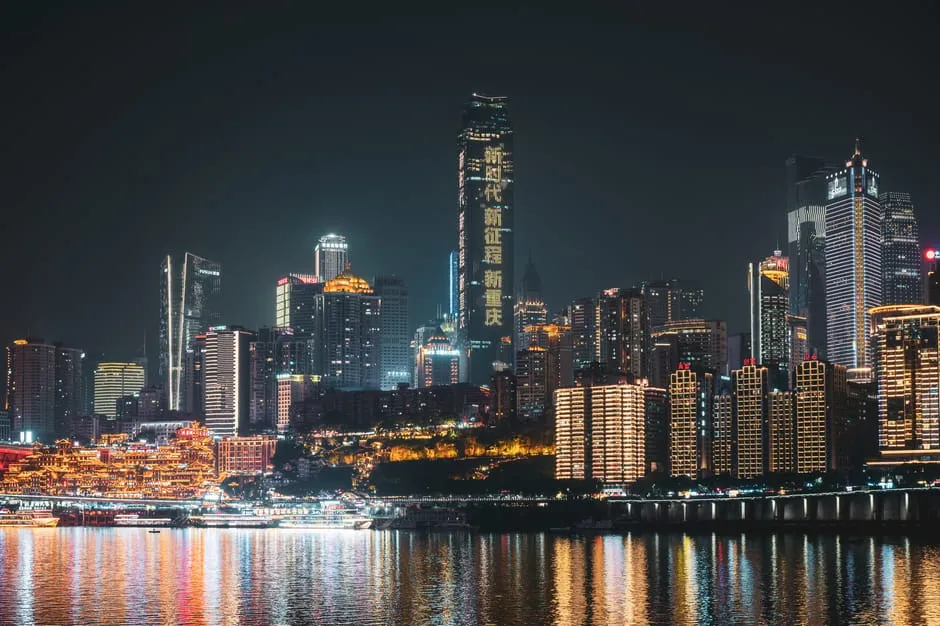
Chongqing — The Complete City Guide 2026
The wartime capital of the Republic of China (1937–1946), the Yangtze + Jialing river-confluence mountain megacity, and China’s defining hotpot capital. Three Chongqings under one renamed monument: the Jiefangbei wartime Spirit Tower (1939), KMT Victory Tower (1947), People’s Liberation Monument (1950) — and the LV-and-Uniqlo CBD that surrounds it today.
¥150–¥1,500/day budget
Subtropical: 6 to 38 °C; “Three Furnaces”
Chinese yuan (¥) — €1 ≈ ¥7.90
Visa-free 30 days (EU/UK/CA); 240h transit (US)
~10M urban core / 32M municipality
Editor’s Note — three Chongqings under one monument
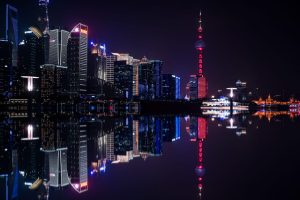
Stand at the foot of the Jiefangbei (解放碑) at twilight in central Yuzhong District. The 27.5-metre clock tower at the heart of the pedestrian shopping street has been three different monuments in three different regimes within a single human lifetime, and the buildings around it now sell Louis Vuitton and Uniqlo. The honest opening for Chongqing is the same monument.
It was erected in 1939 as a wooden mast called the Spirit Tower (精神堡垒, jīngshén bǎolěi), a defiance gesture put up after the Japanese bombing campaign began. The bombing went on for years — the worst raids on 3–4 May 1939 killed an estimated 4,000 civilians in two days, with the wider campaign of approximately 200 raids over 1938–1944 killing a documented count in the high thousands and a probable count materially higher. The wooden mast was rebuilt in concrete in 1946–1947 as the Monument to the Victory of the War of Resistance (抗战胜利纪功碑), commissioned by the returning Kuomintang government to commemorate the end of the war. Three years later, in 1950, the new People’s Republic government renamed it the People’s Liberation Monument (人民解放纪念碑), and that is the name it carries on every shop sign, taxi-driver shorthand, and metro stop today.
The same column, renamed three times across three regimes, now stands surrounded by a Calvin Klein, a Louis Vuitton, a Uniqlo and a high-end multi-storey hotpot restaurant called Chongqing Cuisine City. Each regime rewrote what it stood for; the surrounding commercial pedestrian street rewrote it again. That layering — wartime resistance, KMT victory, PRC liberation, consumer-shopping landmark — is Chongqing’s working organising principle. It carries the city’s three identities without any need to invent a unifying metaphor.
The first Chongqing is the wartime capital. When Nanjing fell in December 1937, the Republic of China government under Chiang Kai-shek moved here, and Chongqing was the working capital of the legitimate Chinese state from late 1937 to October 1946. The Stilwell Museum at 63 Jialing New Road preserves General Joseph W. Stilwell’s residence and command office from 1942–1944, when he was the Allied Chief of Staff in the China Theater. The Flying Tigers — the American Volunteer Group commanded by Claire Chennault — operated from this region. The current museum building was originally the Chongqing mansion of Song Ziwen (T. V. Soong, Chiang’s brother-in-law and Republic of China finance minister); the museum opened in 1994, was renovated in 2003, and most recently reopened in August 2023 for the 140th anniversary of Stilwell’s birth. This identity is the one most Western visitors arrive without.
The second Chongqing is the mountain megacity. The city sits at the confluence of the Yangtze and Jialing rivers on a peninsula of layered hills, and the urban geography is genuinely vertical. The Liziba metro station threads through the sixth-to-eighth floors of a nineteen-storey residential building; the Hongyadong (洪崖洞) commercial complex stacks eleven storeys of restaurants and shops down a riverside cliff face; the Yangtze Cable Car still runs as working transit for residents whose vertical commute is more efficient by ropeway than by switchback road. Since 1997, when Chongqing was separated from Sichuan Province and designated one of four direct-controlled municipalities, it has been administered as a province-equivalent unit and counted as a city of approximately 32 million — though the urban metropolitan core itself is closer to 10 million; the municipal boundary stretches across rural mountain counties almost as large as Ireland. The combination — the actual three-dimensional cliff-and-river geography plus the Douyin-and-TikTok-viral cyberpunk reputation — is the Chongqing identity most foreign tourists arrive expecting.
The third Chongqing is the hotpot capital. The dish — huǒguō (火锅), a bubbling cauldron of beef tallow, dried chillies and Sichuan peppercorns into which diners blanch their own meat and vegetables — is documented to have evolved among Yangtze River dockworkers (棒棒, bàngbàng, the “stick-stick men” who carried cargo up the city’s steep stone steps) in the late nineteenth and early twentieth centuries. The defining flavour is málà (麻辣) — the numbing of Sichuan peppercorn plus the burn of chilli — and Chongqing’s version is materially more aggressive than the Chengdu version 300 kilometres west. The city had approximately 17,700 hotpot businesses and ¥72 billion (€9.1 billion) in annual hotpot consumption per 2023 industry figures (current 2026 figures likely materially higher; the industry has grown roughly 6–9% per year). Hotpot in Chongqing is not a tourist activity. It is the working evening meal for residents.
These three Chongqings — wartime capital, mountain megacity, hotpot capital — coexist within a city most Western travellers cannot place on a map. Beijing is the political capital. Shanghai is the financial capital. Xi’an has the Terracotta Army. Chongqing has the same monument that has been three different things, and an honest version of the city is to take the layering seriously.
A note on a darker recent chapter, because honesty matters: the city carries an unresolved 2012 political shadow in Bo Xilai, the former Chongqing Party Secretary (2007–2012) who ran a high-profile “Sing Red, Smash Black” anti-organised-crime campaign during his tenure here. He was removed from the Politburo in April 2012 after his police chief Wang Lijun defected to the U.S. consulate in Chengdu and triggered the disclosure of the 2011 Heywood murder case involving Bo’s wife Gu Kailai; Bo was sentenced to life imprisonment in September 2013 for bribery, embezzlement and abuse of power. The episode was one of the highest-profile political falls of the Xi Jinping era and is not openly discussed in present-day China. None of this affects a foreign tourist’s visit, but visitors who arrive aware of the recent political-historical context understand parts of the city’s working register that visitors without it do not.
The pages that follow take Chongqing layer by layer. The Jiefangbei monument is across from your starting hotel, the cable car runs from the metro stop you arrive at, and your first hotpot — for somewhere between ¥80 and ¥250 per person depending on where you book — is the working evening of your first day.
Why Chongqing now
A 30-day visa-free regime through 31 December 2026 covers most EU passports, UK, Australia, NZ, Japan, Korea, Singapore. US passport holders qualify for the 240-hour (10-day) visa-free transit through CKG when continuing to a third country. Sweden was added on 10 November 2025; verify your specific passport via the Chinese Foreign Ministry consular page before booking.
The municipality is among China’s most underrated tourist destinations from a Western perspective — most Western itineraries route Beijing → Xi’an → Shanghai and skip the inland heartland entirely. From a Chinese-domestic perspective, Chongqing is one of the top five most-visited destinations in the country, propelled by viral social-media images of the Liziba metro and Hongyadong. Three-day all-in costs are materially lower than Beijing or Shanghai (approximately 30–45% cheaper at equivalent quality) and the food alone — Chongqing hotpot is the dish itself, Beijing-style hotpot is a different lineage — justifies the trip.
The 2026 specifics worth noting: the Hilton Chongqing Liangjiang New Area opens October 2026 in the Liangjiang Digital Economy Industrial Park; the Vignette Collection TFT Chongqing under IHG opened January 2026 on the 51st–66th floors of the Times Financial Building in Jiangbeizui (212 rooms, rooftop pool, panoramic confluence views); the New World Chongqing Hotel opened in early 2026 on Yuhu Island in the Bishan District (200 rooms, suburban lake setting). The most consequential 2026-specific change is the opening of Chongqing East Railway Station on 27 June 2025 — now the largest passenger railway station on the planet by floor area, and the new working anchor of the south-bank district.
Getting there
Chongqing Jiangbei International Airport (CKG)
CKG sits roughly 25 kilometres north-east of central Yuzhong on the Yubei District side of the Jialing River. Three operational passenger terminals: T2 (mostly domestic), T3A (domestic plus all international flights), and T3B (domestic; opened 2017 alongside the third runway). A fourth terminal T4 is part of the airport’s long-term expansion plan; confirm operational status before assuming T4 is open.
Long-haul connections from Europe: Direct flights to and from a small set of European cities (Helsinki, Frankfurt and others) operate on rotating seasonal schedules with frequent service changes; book via a price-comparison engine and confirm the airline’s direct routing before paying. One-stop options via Beijing (PEK or PKX), Shanghai (PVG), Doha (DOH), Istanbul (IST) or Singapore (SIN) are typically cheaper and more reliable than the direct services.
Long-haul from North America: No direct North America–CKG flights operate as of May 2026; the working routing is via Tokyo (HND or NRT), Seoul (ICN), Beijing or Shanghai.
Airport metro (working answer for most): Chongqing Metro Line 10 (also called the Airport Express) connects T2 and T3 to the city. Operating hours: 06:30 to 23:00; ten-minute frequency; fare ¥2–5 depending on stop. The line runs to Yuzhong District (Liyuchi station) and continues across the river to Central Park; from Liyuchi or central transfer points you connect to Line 2 (Liziba, Jiefangbei, Yangtze Cable Car) or Line 6.
K01 Airport Express bus: Every thirty minutes from 08:30 to thirty minutes after the last flight arrives. Approximately ¥15–20 to central drop-off points (verify current price at the airport bus desk).
Taxi or Didi: Metered taxi from the rank ¥80–130 to central Yuzhong, approximately 40–60 minutes depending on traffic. Didi (Chinese ride-share, requires Alipay or WeChat with a working foreign card) typically ¥70–120.
Editor’s tip: Line 10 is fast, predictable, and routes you through the iconic underground geometry of Chongqing’s metro. Use the metro on arrival; the taxi makes sense only if you have heavy luggage and a hotel that’s a long way from a station. The K01 bus exists but the metro is genuinely better unless you arrive after 23:00.
High-speed rail
Chongqing now has three major high-speed rail stations: Chongqing West Railway Station (Shapingba), Chongqing North Railway Station (the older Beizhan in Yubei District), and Chongqing East Railway Station — which opened to passengers on 27 June 2025 and is currently the largest passenger railway station in the world by floor area (1.22 million square metres, 15 platforms, 29 tracks, capacity 16,000 passengers per hour or 300,000 per day). The east station was built in 38 months and is the working anchor of the new south-bank district.
Sample HSR connections (all approximate, verify against the 12306 booking app for current schedules and prices):
– Chengdu East ↔ Chongqing North/West: 1h 32m fastest (G2856), 1.5–2h typical; second-class ¥60–237; ~23 trains daily 07:38–21:11
– Xi’an North ↔ Chongqing North: 5–6h; second-class up to ¥435
– Wuhan ↔ Chongqing North: 4.5–7.5h; second-class ¥144–492; ~50 trains daily
– Beijing West ↔ Chongqing North: 11h 30m+ (long-haul; fly instead)
– Shanghai Hongqiao ↔ Chongqing: 11–13h (long-haul; fly instead)
– Guangzhou South ↔ Chongqing West: from US $24 (~¥175), 7–8h
The high-speed rail is materially better than connecting flights for any journey under approximately 6 hours of rail time; for Beijing or Shanghai, fly.
River cruise (rare arrival, common departure)
Chongqing is the standard upstream embarkation point for Yangtze River Three Gorges cruises to Yichang. Victoria Cruises, Century Cruises (Voyage / Victory / Glory / Paragon) and others run 4-day-3-night downstream itineraries Chongqing → Yichang and 5-day-4-night upstream itineraries Yichang → Chongqing. Embarkation at Chaotianmen Port (朝天门码头), the working anchor of the Yuzhong peninsula tip. Shore excursions on the standard itineraries typically include Shibaozhai Pagoda, Shennv Stream and the Three Gorges Dam Site. Standard-cabin twin-share pricing for the 2026/2027 season runs from US $356 per person on the Victoria Sophia, from US $412 on the Victoria Jenna, and from US $514 on the Victoria Sabrina, plus a compulsory ¥150 (~US $21) service charge payable at check-in. Premium suites can run US $1,500+ per person. Prices spike during Chinese Golden Week (1–7 October) and Spring Festival. Book directly with Victoria or via a Chinese-side agent for English-language service.
12 attractions worth your time
The headline number is twelve because there are genuinely twelve. Most Chongqing itineraries lean on three (Hongyadong, Liziba, hotpot dinner) and miss the wartime-capital layer and the regional UNESCO sites entirely. The list below restores the balance.
1. People’s Liberation Monument (Jiefangbei, 解放碑)
Address: Minquan Road and Minzu Road intersection, Yuzhong District
Hours: Open 24/7 (the surrounding pedestrian shopping street operates approximately 10:00–22:00)
Cost: Free
Best time: Late afternoon for the contrast between the working column and the LED-billboarded skyscrapers around it; evening for the lit-up architecture
The 27.5-metre concrete clock tower described in the Editor’s Note. The historical-marker plaque at the base gives the 1939 → 1947 → 1950 sequence. Spend ten to twenty minutes here; the actual reason to be in Jiefangbei is the surrounding pedestrian-only commercial district (the largest in west China) and the hotpot restaurants on the side streets.
Editor’s tip: Eight Side Streets restaurant cluster (八一路) two blocks south-east of the monument is the working Chongqing-snack hub: spicy noodles, suānlàfěn (酸辣粉, sour-and-spicy sweet potato noodles), xiǎomiàn (小面, Chongqing’s signature breakfast noodles) for ¥10–20 per bowl. The hotpot restaurants directly on Minzu Road carry tourist-tier prices; walk three blocks inland.
Pro Tip: The Jiefangbei panorama from the rooftop terraces of WFC Chongqing (China Enterprise World Trade Tower observation deck) or the Raffles City Crystal Sky Bridge — the connected horizontal skyscraper that resembles a ship moored 250 metres above the river — Standard Exploration Deck entry approximately ¥120; the Skywalk combo (full-body harness, walk along the open spine of the crystal, dangle your feet over the city) is ¥180–200.
2. Hongyadong Folk Customs Area (洪崖洞)
Address: 56 Cangbai Road, Yuzhong District, on the Jialing River cliff face below central Yuzhong
Hours: Outdoor observation 24/7; commercial complex approximately 11:00–24:00
Cost: Free entry; restaurants, shops and individual museum rooms have their own pricing
Best time: 19:00–21:30 for the lit façade — the Studio Ghibli-resembling silhouette (the comparison is widely made but neither Studio Ghibli nor Miyazaki has endorsed it; treat the resemblance as crowd-anecdote, not stated influence) is the lit night version
An eleven-storey cliff-side commercial complex built in the style of a traditional Bashu (Sichuan-Chongqing region) diaojiaolou (吊脚楼, “stilt houses” — the regional vernacular for building down cliff faces). The site itself has 2,300+ years of layered history as a Ba State military fortress and Ming-Qing era commercial pier; the modern Hongyadong complex was demolished and rebuilt in 2003 and opened to the public in its current form on 29 September 2006. The interior is restaurants, souvenir shops, snack stalls and small museums.
Editor’s tip: The most photographed view is from the Qiansimen Bridge (千厮门大桥) directly across the Jialing — the pedestrian footpath gives you the floodlit eleven-storey façade head-on. Cross at the bridge’s near side, walk to roughly the middle, photograph, return. The bridge view is materially better than any view from within Hongyadong itself.
Pro Tip: The complex is mobbed every evening between 19:00 and 22:00, especially weekends and Chinese holiday periods. The Qiansimen Bridge can have queueing for the prime photograph spot during Golden Week (1–7 October) and the Chinese New Year period (late January / early–mid February). For a quiet visit, go at 09:00–11:00 — the lights aren’t on but the architecture is intact and the crowds are absent.
3. Liziba Station (李子坝站, Line 2)
Address: Liziba Station, Chongqing Metro Line 2, Yuzhong District (western edge of the central peninsula)
Hours: Operating: Mon–Fri 06:30–23:16, Weekends 06:37–23:17
Cost: Free to view from the dedicated observation platform; ¥2 metro fare to ride the train itself
Best time: Daytime for the geometry; the observation platform is exposed and uncomfortable in heavy summer afternoon sun
The light-rail station built through the sixth-to-eighth floors of a nineteen-storey residential building. The building and station were engineered simultaneously rather than retrofitted (verify exact construction completion year — most sources cite 2004 but the working historical record is mixed), and the upper floors of the building are occupied as ordinary residential apartments with reinforced sound-insulation. The light-rail trains pass roughly every 90 seconds during operating hours.
The municipal government installed a dedicated observation platform at street level across from the station entrance with English-language plaques explaining the structural engineering. Above the platform, a stairway leads up to the station — riding the metro through the building is the actual experience. From either Hongyadong (north side of the Jialing) or Jiefangbei (south side), Line 2 will take you here in approximately ten to fifteen minutes.
Editor’s tip: The viral social-media images are shot from the dedicated platform. The view is real but the platform is small, frequently crowded, and the queue can stretch fifteen to twenty minutes at peak. The ride-the-train-through-the-building experience is more immediate and costs ¥2.
4. Stilwell Museum (史迪威将军博物馆)
Address: 63 Jialing New Road (嘉陵新路), Yuzhong District
Hours: 09:00–17:00 (verify Monday closure against the museum’s current schedule — some sources report seasonal January–February closure for renovation)
Cost: ¥5–15 entry; advance online booking recommended via Trip.com or the museum WeChat
Allow: 1.5–2 hours
The wartime headquarters and residence of General Joseph W. Stilwell (1883–1946), Allied Chief of Staff in the China Theater during World War II, from 1942 to 1944. Stilwell’s tenure here ended in his recall to the United States in October 1944 after political conflict with Chiang Kai-shek, an episode documented in his diaries and in Barbara Tuchman’s Stilwell and the American Experience in China (1971), which won the Pulitzer Prize for Nonfiction. The building was originally the residence of T. V. Soong (Song Ziwen, 1894–1971), Chiang’s brother-in-law, Republic of China Finance Minister and one of the wartime period’s pivotal political figures. The Stilwell Museum opened in 1994; its most recent renovation reopened in August 2023.
The collection includes Stilwell’s personal effects, his uniform and travel kit, his diary fragments, period photographs, four restored American military vehicles donated in 2007 by Tan Yongzhao (a Chinese-American businessman from California — verify spelling against the museum’s English signage), maps of the China–Burma–India (CBI) theatre, and Flying Tigers materials including pieces relating to General Claire Lee Chennault (1893–1958), commander of the American Volunteer Group (AVG) and later the U.S. Fourteenth Air Force.
The museum is a working window into a chapter most Western tourists arrive without — the U.S.–Republic of China alliance in WWII, the Burma Road and the Hump airlift, the relationship between Stilwell and Chiang Kai-shek, and the wartime political tensions that prefigured the 1945–1949 civil war.
Editor’s tip: The English-language signage was substantially expanded during the 2023 renovation; the museum is the most-anchored English-language WWII-history site in Chongqing. The walk from Jiefangbei to the museum is approximately 25 minutes on uneven streets; consider a taxi (¥20–30) in summer heat.
Pro Tip: Combine with Eling Park (鹅岭公园, free entry, walking distance to the museum) for the panoramic views of the Yangtze and Jialing confluence and the wartime-era radio tower and observation pavilions.
5. Yangtze River Cable Car (长江索道)
Address: Departure stations at 151 Xinhua Road (Yuzhong District) and 6 Shangxin Road / Longmenhao (Nan’an District)
Hours: Mar 1–Nov 30: 08:00–22:00; Dec 1–end Feb: 08:00–21:00; public holidays: 07:30–22:30
Cost: Single trip ¥30 / round trip ¥50
Allow: 30–60 minutes including queue
Originally opened in 1987 as actual urban transit (residents on the Nan’an side commuted to Yuzhong by ropeway, faster than driving around the river bend), the Yangtze Cable Car is now part working transit, part tourist attraction. The 1,166-metre ropeway crosses the Yangtze at approximately 78 metres above water; a single trip is roughly five minutes door-to-door. The river views are panoramic and the working ropeway machinery (cars built in 1986, replaced in 2010) is itself a 1980s-China artefact.
Editor’s tip: The cable car is one of the city’s most-photographed experiences. Peak crowds 14:00–17:00, weekends, and Golden Week — queues of one to two hours are common. Off-peak (09:00–10:30 or after 19:30) the queue can be ten minutes. Round-trip cost is materially cheaper than two singles; if you intend both directions, buy the round trip.
Pro Tip: The Chaotianmen Cable Car (朝天门索道, a separate ropeway) closed for many years and reopened in revised form; its current operational status changes frequently. Confirm it’s running before walking to Chaotianmen specifically for the ropeway.
6. Chongqing China Three Gorges Museum (重庆中国三峡博物馆)
Address: 236 Renmin Road, Yuzhong District (adjacent to People’s Square)
Hours: Tuesday–Sunday 09:00–17:00 (last entry 16:00); closed Mondays
Cost: Free entry; advance reservation via the official WeChat mini-program 5–7 days ahead is strongly recommended
Allow: 2.5–3.5 hours
The state-funded provincial museum opened in 2005 to consolidate Yangtze-and-Three-Gorges cultural artefacts displaced by the Three Gorges Dam reservoir. Permanent collections cover Bashu civilisation (the pre-Han kingdoms of present-day Sichuan and Chongqing), Han Dynasty stone sculptures and tomb reliefs, the Three Gorges environmental and engineering history, the period of Chongqing’s wartime capital, and a complete relocated section of the Daning River cave paintings displaced by reservoir flooding. The museum building was designed by He Jingtang (何镜堂), the architect later responsible for the China Pavilion at Shanghai Expo 2010.
Editor’s tip: This is the working background-reading museum for the Yangtze cruise — visitors who do the museum first understand what they’re seeing on the river. The English-language signage is uneven but materially better than at most regional museums in China.
7. Ciqikou Ancient Town (磁器口古镇)
Address: Ciqikou, Shapingba District, on the Jialing River approximately 14 kilometres north-west of central Yuzhong
Hours: Outdoor area 24/7; commercial street approximately 09:00–22:00
Cost: Free entry
Allow: Half-day
A reconstructed Ming–Qing-era stone-lane town clustered around a former Yangtze tributary porcelain (磁器, cíqì) production centre. Original buildings dated from the Hongwu reign of the Ming (late 14th century); the town was a working Yangtze trading post into the early 20th century. The current commercial street is heavily restored — much of what visitors walk on is post-2000 reconstruction — but the underlying layout, the temple structures and the riverbank teahouses preserve the pre-modern Sichuan-Chongqing market town character.
Editor’s tip: Mobbed on weekends and Chinese holidays. The tourist-tier crafts shops sell mass-produced “Chongqing porcelain” that is rarely from Chongqing; the working snacks are the actual reason to come. Mahua (麻花, twisted fried dough), chenma huasheng (陈麻花生, sticky peanut candy), dougan (豆干, dried tofu strips in chilli oil) are the local specialities. The teahouses with the cool stone floors are the working antidote to summer heat — order a tea (¥15–30 per pot) and sit for an hour.
Pro Tip: Take Metro Line 1 to Ciqikou Station, exit 1B. Avoid the weekend midday slot.
8. Eling Park (鹅岭公园)
Address: 176 Eling Road, Yuzhong District
Hours: 06:00–22:00
Cost: Free entry to the park; the inner observation tower carries a small fee (~¥5)
Allow: 1.5–2 hours
A hilltop park on the western peninsular ridge of Yuzhong, the highest point of central Chongqing, with panoramic views of both the Yangtze and Jialing rivers and the confluence at Chaotianmen. The park was the wartime garden of the prominent industrialist Li Yaoting (李耀庭, 1839–1916), expanded as a public park in the 1950s. The grounds include surviving wartime-era radio towers, observation pavilions and a small pre-Liberation villa.
Editor’s tip: The single best panoramic view of central Chongqing without paying for a skyscraper observation deck. The walk up from Eling Station (Line 2) is approximately 20 minutes uphill on shaded paths; in summer this is the working escape from the heat of the streets.
9. Dazu Rock Carvings (大足石刻) — UNESCO 1999
Address: Baoding Mountain (Baodingshan, 宝顶山) and Beishan (北山) carving complexes, Dazu District, approximately 100 kilometres west of central Chongqing
Hours: 08:30–18:00 (March–October), 09:00–17:30 (November–February); last entry approximately one hour before closing
Cost: Peak season (March 1 – November 30): Baodingshan ¥115 / Beishan ¥70 / combined ¥170. Low season (December 1 – February 28): Baodingshan ¥110 / Beishan ¥50
Allow: Full day from Chongqing (5–6 hours round trip transport plus 4–5 hours at the sites)
The single most important attraction in greater Chongqing and the regional anchor on every serious Yangtze-and-Bashu cultural itinerary. The Dazu Rock Carvings comprise approximately 50,000 individual Buddhist, Daoist and Confucian rock sculptures and reliefs carved into the limestone cliffs of the Dazu District over the late Tang Dynasty through Southern Song period (9th to 13th centuries CE). Inscribed on the UNESCO World Heritage List in 1999. The two principal complexes are:
- Baodingshan (宝顶山) — the more famous of the two, with the Great Reclining Buddha (大佛湾, 31 metres long), the Wheel of Reincarnation, and the most photographed individual carvings. Carved 1174–1252 CE under the monk Zhao Zhifeng (赵智凤).
- Beishan (北山) — smaller, older (carved 892 CE onwards), and quieter than Baodingshan. The most refined individual carvings, including the famous Sun and Moon Buddha and the Datang Three Religions Carvings.
Getting there: The HSR from Chongqing North Station to Dazu South Railway Station is approximately 26 minutes second-class, around ¥40 (US $5.56); five trains daily. From Dazu South, a connecting bus to Baodingshan is approximately 30 minutes. The total round trip from central Chongqing is approximately 5–6 hours; allow a full day.
Editor’s tip: If you can only see one of the two, see Baodingshan — the Great Reclining Buddha is the genuinely defining single image. If you have a full day, do both: Baodingshan in the morning, Beishan in the afternoon.
Pro Tip: English-language audio guide is available at both sites; the printed signage is in Chinese with limited English. Verify English-guide hire (¥30–50) at the Baodingshan visitor centre on arrival.
10. Wulong Karst National Park (武隆喀斯特国家公园) — UNESCO 2007
Address: Wulong District, approximately 165 kilometres south-east of central Chongqing
Hours: Approximately 08:30–17:00; verify against the park’s own pages for seasonal variation
Cost: Three Natural Bridges (三桥) ¥155; Furong Cave (芙蓉洞) ¥150 (includes cable car up to the cave); Longshui Gorge Tiankeng (龙水峡地缝) combined with Three Natural Bridges as a package ticket; verify the latest combined-package pricing at the Wulong District tourism office
Allow: Full day from Chongqing minimum; better as an overnight
The karst-and-tiankeng (天坑, “heavenly pit” — vertical-sided limestone collapse sinkholes) landscape of the Wulong District, inscribed on UNESCO’s World Heritage List in 2007 as part of the South China Karst serial property. The headline sites are the Three Natural Bridges (the three largest natural stone bridges in Asia, spanning the Yangshui River gorge), Furong Cave (a long horizontal limestone cavern with extensive flowstone formations), and the Longshui Gorge Tiankeng (a 200-metre-deep vertical sinkhole accessed via a paved walkway and elevator).
The site is dramatic on its own merit; it has also served as the filming location for a number of Chinese-domestic film and television productions, and Michael Bay’s 2017 Transformers: The Last Knight scouted scenes in the Wulong-Dazu region (specific scenes-at-Wulong attribution varies across sources; treat the film-location claim as conventional anecdote rather than fully verified).
Getting there: HSR from Chongqing North to Wulong Station approximately 90 minutes, ¥90–120 second-class. From Wulong Station, a tourist shuttle bus to the Three Natural Bridges site is approximately 30 minutes. The full Three Natural Bridges plus Furong Cave plus Tiankeng circuit takes a full day; consider overnighting at one of the local guesthouses or Wulong Banyan Tree resort and returning the following day.
Editor’s tip: Wulong is genuinely worth the day. Avoid Chinese national holidays — the Three Natural Bridges can queue 90+ minutes. The shoulder months (April, May, September, October) deliver the best weather and the working photographs.
11. Cijinkou Hongyan Spirit Memorial Centre (红岩魂陈列馆 / 红岩村)
Address: Hongyan Village, 52 Hongyan Village Road, Shapingba District
Hours: Tuesday–Sunday 09:00–17:00; closed Mondays (verify current schedule and reservation policy)
Cost: Free entry; advance WeChat reservation recommended
Allow: 2 hours
The Republic of China–era 8th Route Army Office and underground CCP Southern Bureau headquarters during the wartime United Front period (1939–1946). Zhou Enlai, Dong Biwu and other Communist Party leaders operated from this site during the period when both KMT and CCP were nominally allied against Japan. The site now functions as a state-funded historical-memorial museum focused on the “Hongyan Spirit” (红岩精神) — the working CCP-era moral and political legacy of the CCP underground in wartime Chongqing.
Editor’s tip: The presentation is unambiguously partisan — this is the state’s framing of the wartime CCP underground, and the curatorial voice reflects that. It is also, however, materially anchored: the site preserves the actual building, the actual desks and meeting rooms of Zhou Enlai’s wartime Chongqing office. Visitors who do both the Stilwell Museum and the Hongyan Spirit Centre on the same day get the two regimes’ parallel wartime narratives side by side. The contrast itself is the working learning.
12. People’s Auditorium and People’s Square (人民大礼堂)
Address: 173 Renmin Road, Yuzhong District (directly across from the Three Gorges Museum)
Hours: Exterior accessible 24/7; interior 08:00–18:00
Cost: ¥8–10 entry
Allow: 1 hour
The 1954-completed neo-classical Chinese-style public auditorium modelled on the Temple of Heaven, built as the political-ceremonial centre of the new municipality. The central dome is 65 metres in diameter; the building seats 3,400 people in the working main hall. The exterior is the photograph; the interior is open to visitors during non-event days.
Editor’s tip: Pair with the Three Gorges Museum directly across the square — the Three Gorges Museum is the curatorial anchor, the Auditorium is the political anchor, and the square between them is the working public space of central Chongqing. The combined morning is one of the city’s stronger working half-days.
Neighbourhoods at a glance
Yuzhong District (central peninsula) — the historical core
The peninsula between the Yangtze and Jialing rivers. The Jiefangbei monument, Hongyadong, the cable car upper station, the Stilwell Museum, Eling Park and the Three Gorges Museum are all here. Approximately 60–75% of an average four-day Chongqing visit is spent inside Yuzhong. The streets are layered vertically — the metro stations are often deep underground and the surface streets switchback up the cliff. Walking distances are deceptive; the apparent 800-metre walk on the map can include a 30-metre vertical climb.
Jiangbei District (north of Jialing) — financial and shopping
The new financial district anchored on the Jiangbeizui Financial Centre (江北嘴金融中心) and the Guanyin Bridge pedestrian shopping street (观音桥步行街). Bigger and brasher than Jiefangbei; functional rather than scenic. Most international-tier hotels are clustering here or in Yubei. CKG airport is in this direction across Jiangbei.
Nan’an District (south of Yangtze) — the cable car endpoint
The southern bank of the Yangtze, opposite Yuzhong. The lower terminus of the Yangtze Cable Car is here, as is the panoramic-view-of-Yuzhong Yikeshu Observation Deck (一棵树观景台). The neighbourhood’s character is residential and commercial without the Yuzhong density.
Shapingba District (west) — universities and Ciqikou
The university belt and the Ciqikou ancient town. Chongqing University and Southwest University are both here, and the student-quarter food scene is materially cheaper than central Yuzhong. Ciqikou is the major tourist anchor.
Yubei District (north-east) — airport and Central Park
The northern district where the airport sits. The Central Park (中央公园) is the largest urban park in central Chongqing and is the metro Line 10 spine before the airport. The new financial-development cluster in Yubei is anchored on Liangjiang New District infrastructure (where the Hilton Chongqing Liangjiang opens October 2026).
Bishan District (suburban west) — emerging hotel cluster
A suburban district approximately 30 minutes west of Yuzhong by HSR. Notable in 2026 because the New World Chongqing Hotel opened here in early 2026 with Yuhu Island as its anchor. The character is leafy-suburban rather than urban-Chongqing; consider Bishan for a relaxed final night before flying out, not as a base.
Where to stay by budget
The honest sorting: stay in central Yuzhong (Jiefangbei area) for a first visit. The metro will get you to everywhere else fast, and the central peninsula is where the historical and food-cluster density is highest.
Budget (¥150–400 per night / €19–51)
Yuzhong hostels: the working backpacker tier in Chongqing rotates faster than international properties; check Trip.com or Hostelworld for current-rated properties before booking. Recurring anchors include Travelling With Hostel Chongqing (沐悦青年旅社) near Liziba and Tina’s Hostel Chongqing in central Yuzhong; dorm beds typically ¥80–120, private singles ¥250–400.
The Chinese mid-tier domestic chains — Hanting, 7 Days Inn, Home Inn, Vienna Hotel — are clean, near-metro, and frequently under ¥250 per night with international payment. None has English-speaking reception as default; arrive with the address in Chinese.
Mid-range (¥400–900 per night / €51–114)
- Crowne Plaza Chongqing Jiefangbei (formerly InterContinental, rebranded) — central Yuzhong, walking distance to Hongyadong, established international-tier service
- Wanda Realm Chongqing Jiefangbei — central, IHG-affiliated
- JW Marriott Chongqing — slightly out of Yuzhong (Guanyin Bridge), modern, reliable
- Sheraton Chongqing Hotel — Jiangbei District, modern, good for business travellers
- Wanda Reign on the Bund Chongqing — riverside Jiangbei, panoramic views
High-end (¥900–2,500 per night / €114–316)
- The Ritz-Carlton Chongqing — Jiangbeizui Financial District, panoramic confluence views, the established luxury anchor
- Niccolo Chongqing — IFS Tower, top-tier service and food, central
- St. Regis Chongqing — Jiangbeizui, modern luxury, large rooms
- Mandarin Oriental Chongqing — 231 guest rooms including 25 suites and 18 serviced apartments on the upper floors of a 248-metre tower; central Jiefangbei area
- W Chongqing — modern lifestyle, central
- Conrad Chongqing — IFS-adjacent, business-luxury
Luxury (¥2,500+ per night / €316+)
- Mandarin Oriental Chongqing presidential suites
- Ritz-Carlton Chongqing suites with confluence views
- The Niccolo Chongqing residences
2026 openings (verified)
- Vignette Collection TFT Chongqing (IHG) — opened January 2026 on the 51st–66th floors of the Times Financial Building in the Jiangbeizui core business district. 212 guest rooms and suites; perched over 200 metres above the city skyline with panoramic confluence views; rooftop pool and 270° river-view gym on the 66th floor. Design inspired by Chongqing’s arch-bridge culture.
- New World Chongqing Hotel — opened early 2026 at the centre of the 400,000-square-metre Yuhu Lake on Yuhu Island, Bishan District. 200 guest rooms; Cantonese and Sichuan dining; suburban-natural setting rather than central-urban.
- Hilton Chongqing Liangjiang New Area — opening October 2026 at Bldg 1, No. 8 Fortune East Road, Liangjiang New District (Liangjiang Digital Economy Industrial Park, near several Fortune 500 China headquarters).
- Bert High-Altitude Hotel Jiangbeizui Financial Center Branch — opened January 2026.
- Holiday Riverside Hotel Chongqing — opened January 2026.
Editor’s tip: Yuzhong is the working centre and the right base for a first visit. Jiangbei is functional. Bishan is suburban-quiet, useful only for a pre-flight final night. The cable car ride from Yuzhong upper to Nan’an is more interesting than basing yourself in Nan’an.
Where to eat — hotpot and the rest
Hotpot — Chongqing’s defining cuisine
The dish: bubbling cauldron of beef tallow plus dried red chillies plus Sichuan peppercorns plus broth aromatics. Diners blanch their own thinly-sliced meat, organ meat, vegetables, mushrooms and tofu in the boiling liquid. The defining flavour is málà (麻辣) — the má (麻, numbing) of Sichuan peppercorn combined with the là (辣, burning) of chilli. Chongqing’s hotpot is materially spicier than Chengdu’s and the spice is the working point — Chengdu hotpot can use a milder mushroom or tomato broth, Chongqing hotpot is fundamentally the heavy red-oil version.
The order: a yuanyang guo (鸳鸯锅, “mandarin duck pot”) is a split-broth design with red-oil-spicy on one side and clear-aromatic on the other — the right order for visitors who haven’t built up Sichuan-pepper tolerance.
The price tier: a working local hotpot dinner is approximately ¥80–150 per person; the tourist-tier chain restaurants are ¥150–250; the high-end multi-storey restaurants near Jiefangbei can run ¥250–500.
Named hotpot anchors
- Liuyishou Hotpot (刘一手火锅) — large modern chain with multiple branches across Yuzhong and Jiangbei. The Guanyin Bridge branch is the working flagship; the Jiefangbei People’s Liberation Monument branch is the central tourist anchor. Approximately ¥120–180 per person.
- Dezhuang Hotpot (德庄火锅) — the brand with the deep, oil-heavy classical Chongqing broth; multiple branches across the city; one of the most-cited regional anchors. The brand holds a Guinness World Records entry for the world’s largest hotpot.
- Xiaolongkan Hotpot (小龙坎火锅) — newer, more design-forward chain; popular with younger Chinese visitors; multiple branches.
- Lao Pai Sichuan Hotpot (老牌川渝火锅) — old-school Chongqing-style, no concessions to non-spicy tier; the working local version, materially less touristy.
Editor’s tip: The hotpot restaurants on Minzu Road directly fronting Jiefangbei monument are tourist-tier in pricing and content. Walk three blocks south-east into the side streets behind the Calvin Klein-and-Uniqlo strip; the local-tier restaurants with hand-written Chinese-only menus charge half the price for the working product. If your Chinese is limited, point at what the neighbouring tables ordered.
Pro Tip: Order maoduyao (毛肚, sheet tripe, the working defining hotpot ingredient — strips of cow stomach lining blanched 7–10 seconds in the boiling broth), yashen (鸭肠, blanched duck intestine), xuewang (血旺, blanched duck-blood pudding), niurou (牛肉, thinly sliced beef). Skip the tomato-shrimp wonton — that is the wrong cuisine.
Chongqing xiaomian (小面, “small noodles”) — the working breakfast
The signature working-Chongqing dish for breakfast and quick lunch. Wheat noodles in spicy broth with peanuts, pickled mustard greens, chopped scallion and chili oil. The price tier is ¥10–20 per bowl. Every restaurant tier offers their version; the working anchor restaurants are small neighbourhood places.
- Eight Side Streets cluster (八一路好吃街) — the dense food street two blocks south-east of Jiefangbei with multiple xiaomian, suanlafen and snack vendors at ¥10–20 per item; the working breakfast and quick-lunch anchor for central Yuzhong
- Liangjiang Noodle (两江小面) and other neighbourhood-tier xiaomian shops across Yuzhong; ¥10–18 per bowl with peanuts, pickled mustard greens, chili oil and the working numbing tier
Other defining Chongqing dishes
- Suanlafen (酸辣粉) — sour-and-spicy sweet potato noodles; approximately ¥10–15
- Maoxuewang (毛血旺) — duck-blood-and-organ stew; approximately ¥40–70
- Liangfen (凉粉) — cold mung-bean jelly noodles in chili oil; approximately ¥8–15
- Shuizhu yu (水煮鱼) — Sichuan “water-cooked” spicy fish in chili oil; approximately ¥60–120
- Dou hua fan (豆花饭) — fresh tofu pudding over rice with chili sauce; approximately ¥15–25
Mid-range and high-end Chongqing-cuisine restaurants
- Family Li Imperial Cuisine Chongqing Branch (厉家菜) — the first non-Beijing branch of the Beijing two-Michelin-star institution; opened in Chongqing on 10 January 2025. The Chongqing branch itself is not Michelin-rated because Chongqing has no Michelin Guide edition; the Beijing parent’s two stars do not transfer.
- Yuxin Sichuan Dish (渝信川菜) — established Chongqing-Sichuan restaurant chain; multiple branches; mid-range; reliable for non-hotpot Sichuan dishes.
- Yuanyang Wonton (鸳鸯火锅创始店, Yuanyang Huoguo Chuangshidian) — claims to have invented the mandarin-duck split-broth pot in the 1980s; central Yuzhong, working anchor for first-time hotpot diners who want the historical version.
- Big Cliff Brand (大渝火锅) and Da Wan Dou Hua (大碗豆花) are reliable working-class non-hotpot Chongqing-Sichuan options for noodles, dou hua and stir-fries.
Non-Chinese restaurants
Yuzhong and Jiangbei have a growing Western-restaurant scene clustered around the international hotels — Niccolo, Mandarin Oriental, Ritz-Carlton, St. Regis, W Chongqing, JW Marriott. Specific independent Western-restaurant anchors rotate frequently; consult Trip.com or the hotel concierge for current standouts. The working Chongqing visit does not need a Western dinner; it does need at least one full hotpot dinner and one breakfast xiaomian bowl.
Drinking — tea houses, baijiu, beer
The Chinese drinking culture in Chongqing is principally tea and baijiu, with a relatively small but growing craft-beer scene. International-hotel rooftop bars supply the city’s working high-end cocktail tier; the working Chongqing rooftop view at twilight is itself the draw rather than the drink.
Tea houses
- Ciqikou teahouses — multiple traditional teahouses with stone floors, wooden tables, and bamboo-leaf-roof shelters; ¥15–40 per pot of tea
- Eling Park teahouses — open-air pavilions with confluence views; ¥20–40 per pot
Baijiu
Sichuan-region baijiu is the working anchor — Wuliangye (五粮液) and Luzhou Laojiao (泸州老窖) are the regional Big Two; both are based in Sichuan rather than Chongqing proper but are the working spirits at any Chongqing hotpot table. The working Sichuan-region baijiu drinking session pairs the spirit with hotpot — the heavy fire of the broth and the heavy fire of the 52%-alcohol baijiu match each other.
Craft beer and Western drinks
- Chongqing Beer (重庆啤酒) — the regional working pilsner; everywhere; ¥6–10 per bottle in supermarkets, ¥15–25 in restaurants. Chongqing Brewery was historically the city’s local brand; now partly owned by Carlsberg.
- Niccolo Chongqing, Mandarin Oriental Chongqing and Ritz-Carlton Chongqing rooftop bars supply the working international-hotel cocktail tier.
- Smaller independent craft-beer bars cluster around the Jiefangbei pedestrian-street side streets and the Guanyin Bridge district; specific names rotate.
Getting around
Metro
Chongqing operates one of China’s most-extensive urban rail networks. Lines 1, 2, 3, 5, 6, 9, 10 and others run from approximately 06:30 to 23:00. Fares are ¥2–10 by distance. The metro is air-conditioned, English-signed at all stations, and materially the fastest way around the city.
Useful lines for tourists:
– Line 1 — Ciqikou to Xiaoshizi (central Yuzhong)
– Line 2 — Liziba, Jiefangbei (Linjiangmen station), Yangtze Cable Car (Xiaoshizi station)
– Line 6 — Connection east-west across the city
– Line 10 — Airport Express, T2/T3 to Yuzhong
The single most-photographed metro experience is riding Line 2 through the Liziba station — the train threads through the residential building described above. The ride is 2 minutes and ¥2.
Buses
The bus network is dense but Chinese-only signed; rely on the metro for tourist routes.
Taxis and Didi
Taxis are abundant in central Yuzhong; meter fares start at ¥10 for the first 3 km, then ¥2.5 per km. The standard Yuzhong-to-Jiangbei or Yuzhong-to-Nan’an cross-river taxi is ¥30–60.
Didi (Chinese ride-share) is the working answer if you have set up Alipay or WeChat with an international credit card. The English-language Didi interface is available. Approximate cost is 70–90% of metered taxi.
Walking
Central Yuzhong is walkable in principle but vertically demanding in practice. The metro stations are sometimes 60+ metres below street level; the surface streets switchback up cliffs. Allow more time for short distances than you would in Beijing or Shanghai.
Yangtze Cable Car
Working transit; not just tourism. Single trip ¥20 / round trip ¥30; 3–4 minutes Yuzhong upper to Nan’an lower (or reverse).
What does not work
- Bicycles — the vertical geography is brutal; do not attempt
- Hire-cars — Chinese driving license requirement and Chongqing traffic make this unrealistic for visitors
- Google Maps — blocked without VPN; use Baidu Maps with the English interface or Amap (Gaode) with the English mode
When to visit
Best months: April, May, September, October. Mild temperatures (10–25°C), clear afternoons, manageable humidity.
Avoid (summer heat): July and August. Daytime highs 35–38°C, peak extremes 43°C, urban heat island plus river humidity. One of the “Three Furnaces” reputation is justified.
Avoid (Chinese national holidays): Chinese New Year (late January or early-to-mid February, exact dates vary by year), Qingming Festival (early April), Labour Day (1–3 May), Mid-Autumn Festival (mid-September), and Golden Week (1–7 October). The Liziba metro platform and Hongyadong are mobbed; hotel rates triple; HSR tickets sell out.
Affordable but limited: November, December, January. Cold (6–12°C), foggy, low-tourist season; hotel rates 30–50% below peak.
Foggy season: Late autumn through early spring (October–March). Chongqing is the working “foggy city” — averaging 68+ foggy days per year. The fog itself is atmospheric; the Hongyadong night photographs become harder.
Month-by-month weather
| Month | Avg low | Avg high | Notes |
|---|---|---|---|
| January | 6°C | 10°C | Foggy, damp, cold |
| February | 7°C | 13°C | Foggy, damp |
| March | 11°C | 18°C | Spring; warming, clearing |
| April | 15°C | 22°C | Best month — mild, clear |
| May | 19°C | 26°C | Warming; clear afternoons |
| June | 22°C | 30°C | First heat; thunderstorms |
| July | 25°C | 35°C | Furnace heat begins |
| August | 25°C | 36°C | Furnace peak; 43°C extremes |
| September | 21°C | 29°C | Cooling; clearing |
| October | 16°C | 22°C | Second-best month |
| November | 11°C | 17°C | Cooling; fog returning |
| December | 7°C | 12°C | Cold, damp, foggy |
The annual average is approximately 19.2°C. Annual rainfall is 1,000–1,100 mm. The “Ba mountains’ night rain” (巴山夜雨) is the working description — summer rain in Chongqing tends to arrive overnight, with cleared mornings and humid afternoons.
Daily budget breakdown
Backpacker — ¥150–350 per person per day (€19–44)
- Hostel dorm bed ¥80–120
- Two xiaomian meals + one street-snack lunch ¥50–80
- Metro and short walks ¥10–20
- One entry to a free or low-cost attraction (Hongyadong observation, Eling Park, Three Gorges Museum) ¥0–25
- Optional Yangtze Cable Car round trip ¥30
Mid-range — ¥600–1,200 per person per day (€76–152)
- Mid-tier hotel single room ¥400–600
- Three meals at restaurant tier ¥150–250
- Metro and one taxi ¥30–60
- Two attractions including one paid (Stilwell Museum + Yangtze Cable Car or Liziba) ¥40–80
- One hotpot dinner with beer ¥120–200
Luxury — ¥1,500–2,800+ per person per day (€190–354+)
- Top-tier hotel suite ¥1,500–2,500
- Three meals including one luxury restaurant ¥400–800
- Private guide / driver ¥600–1,200
- Multiple attractions + Yangtze Cable Car
The defining single-attraction outlay: Dazu Rock Carvings (¥170 combined ticket peak season) plus HSR round-trip from Chongqing North (¥70–120) plus shuttle bus and lunch (¥80–120) totals approximately ¥320–410 (€40–52) for a full day-trip.
Sample itineraries
Two days — the working compressed visit
Day 1: Central Yuzhong
– 09:00 — Jiefangbei monument, then walking exploration of the pedestrian shopping street and Eight Side Streets
– 11:30 — Lunch: xiaomian and snacks on Eight Side Streets, ¥30–60
– 13:00 — Yangtze River Cable Car round trip
– 14:30 — Eling Park for the panoramic view of the confluence
– 16:00 — Stilwell Museum
– 18:30 — Hotpot dinner near Jiefangbei (¥100–200)
– 20:30 — Hongyadong photographed from Qiansimen Bridge; brief walk through the complex
Day 2: Sites and shopping
– 09:00 — Liziba metro station observation + ride-through experience
– 10:30 — Three Gorges Museum + People’s Auditorium
– 12:30 — Lunch in central Yuzhong, ¥40–80
– 14:00 — Ciqikou Ancient Town (Line 1) — afternoon teahouse + mahua
– 17:30 — Return to central Yuzhong; departure for the airport
Three days — the right basic visit
Day 1: Yuzhong as above (Jiefangbei, Yangtze Cable Car, Eling Park, Stilwell Museum, hotpot dinner)
Day 2: Mountain-city day (Liziba, Three Gorges Museum + People’s Auditorium, Hongyadong, optional Hongyan Spirit Memorial)
Day 3: Dazu Rock Carvings day trip (full day, HSR there and back)
Four to five days — the regional anchor visit
Add Wulong Karst (full day or overnight) and Ciqikou (half-day) to the above.
Six to seven days — Chongqing plus Yangtze cruise
Days 1–3 in central Chongqing. Days 4–6 (4 days 3 nights) downstream Yangtze cruise Chongqing → Yichang. Day 7: depart from Yichang or HSR back to Chongqing.
Ten days — the full Bashu cultural circuit
Add Chengdu (3 days) plus Leshan Giant Buddha day trip plus Mount Emei (2 days) plus Chongqing core (3 days) plus Wulong Karst (1 day) or Dazu Rock Carvings (1 day).
Best Day Under €25
Total: ¥165 (€20.85) — verified against May 2026 exchange rates.
- Breakfast: xiaomian + soybean milk at a Yuzhong neighbourhood place, ¥15
- Mid-morning: walk Jiefangbei + Hongyadong exterior (free)
- Metro to Liziba (¥2) + ride through the building (¥2) + observation platform (free)
- Lunch: dou hua fan + suanlaфen at a working neighbourhood place, ¥25
- Eling Park afternoon (free entry)
- Yangtze Cable Car single trip to Nan’an, ¥20
- Cable car return ¥20 (you can also walk back across via Chaotianmen — saves ¥20 if your legs are willing)
- Late-afternoon teahouse at Eling Park or in central Yuzhong, ¥25
- Dinner: hotpot at a working local place (not Jiefangbei tourist-tier), ¥80
If you swap one cable car leg for the walk-back via Chaotianmen and skip the teahouse, you arrive at ¥120 (€15.20). The most-defining hotpot dinner doesn’t quite fit under €15.
On the budget leaderboard: Cairo $3.50 · Bogotá $6 · Kuala Lumpur €8.50 · Munich €12 · San Salvador €13 · Bangalore €15 · Chongqing €20.85 · Tbilisi/Chengdu/Shenzhen/Xi’an €25 · Fiji €29 · Washington €30 · Nicosia €32.60 · Sicily/Corsica €35–40 · Maldives $50.
Chongqing is genuinely one of the cheaper major Chinese cities; the hotpot working tier holds the city at the Bangalore-Munich price band rather than the Chengdu-Xi’an band.
Hot, rainy, and off-season plans
The 38°C summer day
Skip outdoor attractions between 11:00 and 17:00. The working summer day:
– Early morning (07:00–10:00) — outdoor walks at Eling Park, Hongyadong exterior, Jiefangbei
– Midday (11:00–16:00) — Three Gorges Museum (air-conditioned, multi-hour); Stilwell Museum (air-conditioned, 1.5–2 hours); air-conditioned hotel rest
– Evening (17:00 onwards) — Yangtze Cable Car (breezier); riverbank walks; dinner
The Ba-mountain-night-rain plan
Summer thunderstorms typically arrive overnight; the morning is dry. Don’t cancel outdoor plans for the forecast; do bring an umbrella and a rain jacket.
The foggy-winter visit
December–February. The fog itself is atmospheric; visibility for the Hongyadong photograph becomes harder. The working winter activities are the museums (Three Gorges, Stilwell), the teahouses, hotpot dinners, and the Yangtze cruise (slightly off-peak for downstream).
Chinese New Year (late January / early-to-mid February)
Hotel rates triple; restaurant closures common; HSR fully booked. If you must visit during the period, book everything 60+ days ahead.
Day trips
- Dazu Rock Carvings — see attraction #9
- Wulong Karst National Park — see attraction #10
- Chengdu by HSR — 1–1h 40m each way; a day-trip is feasible but tight (Leshan Giant Buddha + Chengdu food street + Wuhou Shrine + back is overstuffed); consider an overnight in Chengdu instead
- Wushan / Three Gorges — overnight cruise minimum; see Getting There above
Safety and practical concerns
Crime
The U.S. State Department travel advisory for China is Level 2 — Exercise Increased Caution as of May 2026 (verify before publish). Chongqing-specific safety scores are in the high 80s out of 100 in international perception indices. Violent crime against foreign tourists is rare. The Chinese state’s working security apparatus is highly visible — uniformed police at metro stations, surveillance cameras everywhere — and the day-to-day effect is low petty-crime rates.
Scams (the actual concern)
Scam awareness is the working risk:
– Tea-house “art exhibition” scams — strangers approaching tourists in Jiefangbei or Hongyadong and inviting them to a “private tea tasting” or “art gallery” that produces an inflated bill at the end. Decline.
– Inflated taxi fares — unmetered or “meter is broken” taxis; insist on the meter or use Didi
– Souvenir mark-ups — Ciqikou crafts shops sell mass-produced items at tourist-tier prices
Air quality
Air quality in Chongqing is materially affected by winter thermal inversions in the river basin. The PM2.5 index in November–February frequently exceeds 100 AQI; the September–May daily average is typically 50–80. Compare against the IQAir real-time index before booking; if you have respiratory sensitivities, consider April–May or September.
Tap water
Not drinkable. Bottled water (¥2–5 per 500 ml) is universal. Hotels provide complimentary bottled water.
Electrical
Type A and Type I sockets, 220V/50Hz. UK and EU plugs need adapters; US two-prong plugs fit without adapters.
Connectivity
Without a VPN: Google, Facebook, WhatsApp, Instagram, X (Twitter), Gmail are blocked. Most Western news sites (BBC, NYT, Guardian) are blocked.
With a VPN: Working VPNs change frequently as the Chinese state’s Great Firewall countermeasures evolve. Install your chosen VPN before arriving in China — the VPN provider’s own download page is typically blocked once you arrive. Recurringly-working VPN choices over the past 24 months include ExpressVPN, Astrill, Mullvad and Shadowsocks-based services; verify current state with a recent Reddit r/chinalife thread before paying.
Working alternatives:
– Baidu Maps (with English mode) instead of Google Maps
– WeChat (微信) for messaging
– Alipay International for payments
– Bing for English-language search
Cashless payments
China is functionally cashless — Alipay (支付宝) and WeChat Pay (微信支付) are the working answer for almost every transaction. As a foreign visitor:
– Alipay Tour Pass allows linking foreign credit cards (Visa, Mastercard, Amex)
– WeChat international wallet has similar functionality
– Bring both apps; some merchants accept only one
– Cash backup: ¥500–1,000 in small denominations for the rare cash-only stall
– Foreign credit cards are increasingly accepted at international hotels and high-end restaurants but rejected at most street-tier merchants
Language
Mandarin Chinese is universal; the local Sichuan-Chongqing topolect (重庆话) is spoken in casual contexts but every Chinese speaker also speaks Mandarin. English-language signage exists at metro stations, major museums and international hotels; English-language conversation outside the international hotel tier is limited. Bring a translation app (Pleco, Google Translate offline pack, Baidu Translate).
Visa and entry
30-day visa-free policy
As of 10 November 2025, China’s unilateral 30-day visa-free policy covers approximately 36 countries through 31 December 2026. Eligible passports include all EU member states, the United Kingdom, Switzerland, Norway, Iceland, Ireland, Australia, New Zealand, Canada, Japan, Korea, Singapore, Malaysia, Brunei, and several Latin American countries. Sweden was added on 10 November 2025; the United Kingdom and Canada were added on 17 February 2025.
Eligible travel: Tourism, business, family visits, transit; not journalism, religious activities, or paid work.
Maximum stay: 30 days per entry, no extensions allowed except for emergencies.
Required at entry: Valid passport (6 months remaining), confirmed return or onward ticket, hotel reservation address.
Verify before booking: the Chinese Foreign Ministry consular page (English available) for the current list of eligible passports.
240-hour transit policy (US, others)
US passport holders and citizens of approximately 55 countries are not on the 30-day list but qualify for the 240-hour (10-day) visa-free transit policy when transiting through China to a third country.
Eligible at CKG: Yes — Chongqing Jiangbei International Airport is one of 65 nationally approved 240-hour transit ports. Chongqing falls within the “Southern China zone” which permits onward movement within the permitted areas of 24 provinces, autonomous regions and municipalities (the NIA publishes the list and each area’s boundary).
Required:
– Confirmed onward ticket to a third country (not back to your origin)
– Stay within the permitted areas of the 24 listed provinces, autonomous regions and municipalities — the NIA allows cross-province travel among them within the 240 hours
– Maximum 240 consecutive hours (10 days) of stay
The 240-hour policy is materially more flexible than the older 144-hour policy that preceded it (expanded December 2024); the zone spans 24 provinces, autonomous regions and municipalities, with cross-province travel allowed among their permitted areas. Verify current rules against the National Immigration Administration (NIA) page at nia.gov.cn before booking.
Hotel registration
All foreign visitors must register their residence within 24 hours of arrival. Hotel check-in handles this automatically; if you stay with friends or rent through Airbnb (which has limited Chinese-market operation), you must self-register at the local police station within 24 hours.
Hidden Chongqing
Anchored alternatives to the heavily-walked Jiefangbei-Hongyadong-Liziba circuit:
Yikeshu Observation Deck (一棵树观景台)
The lone-tree panoramic-view deck on the Nan’an side of Nanshan Mountain at approximately 437 metres elevation, opposite Yuzhong. The night view of the Yuzhong peninsula lit up earns the deck its nickname “Little Hong Kong”; entry approximately ¥30, open 09:00–22:30 with last admission 22:00. The cable car from Yuzhong upper to Nan’an lower puts you about 25 minutes’ uphill walk from Yikeshu; consider a taxi from the cable car lower station.
Three Gorges Museum specifically for the wartime-Chongqing room
The Three Gorges Museum’s permanent collection on the wartime period — the Stilwell-era artefacts, the Japanese-bombing-damage photographs, the wartime newspaper morgue — is the working pair to the Stilwell Museum.
Beibei District thermal hot springs
Approximately 50 kilometres north of central Chongqing, Beibei District contains a cluster of natural thermal hot spring resorts. The most established is Tianci Huatang Forest Hot Spring Resort (the Lushan / Bishan branch occupies a 3,000-mu / 200-hectare site, with the hotel tier covering 1,000 mu). Day-trip-feasible; the working version is a full overnight. Overnight room rates run approximately US $26–50; verify the day-use pass tier directly with the resort.
Huguang Guild Hall (湖广会馆)
A restored Ming–Qing-Dynasty merchants’ guild hall at 4 Dongshuimen Zheng Street, near the Dongshuimen Yangtze River Bridge. ¥30 adult entry, ¥15 student/seniors 60–64 with ID, free for under-1.2-metres / over-65s / active military. Hours 09:00–17:30, last entry 17:00, closed Mondays except public holidays. The exterior facade and interior courtyards include 18th–19th century original construction; the operatic stage, cultural-relic museum, historical exhibits and garden architecture support a 2–3 hour visit. The building represents the historical Chongqing of the Ming-Qing river-merchant guild era, before the wartime capital and before the mountain-megacity.
Fengjie and the Three Gorges Yangtze leg
The four-day downstream cruise from Chongqing to Yichang passes Fengjie (奉节), the ancient Tang-Dynasty poetic anchor where Du Fu and Li Bai wrote some of their major Yangtze works. The Baidicheng (白帝城, “White Emperor City”) temple complex at Fengjie is included on most cruise itineraries; the layered Tang poetry is the cultural depth of the cruise that the Three Gorges Dam itself doesn’t carry.
Republican-era streets in Cijinkou
The Republican-era warehouses and walkways near the Cijinkou docks (south of Jiefangbei) preserve some of the working pre-1949 commercial Chongqing that the Hongyadong reconstruction post-dates. Walk down Cijinkou pedestrian street and across to the riverbank; the warehouses on the south side are working remnants.
Romantic Chongqing
Less obvious as a “romantic destination” than Lijiang or Hangzhou; the romantic Chongqing relies on the river-confluence panoramas and the genuinely unusual mountain-city geometry rather than on conventional pretty-village scenes.
- Yikeshu Observation Deck at night — the lit-up Yuzhong peninsula photographs from the Nan’an side
- Yangtze Cable Car evening trip — Yuzhong-to-Nan’an at twilight, especially in the foggy winter months when the lights diffuse through the fog
- Eling Park sunset — the working confluence-panorama
- Hongyadong from the Qiansimen Bridge at 21:00 — the lit cliff complex is genuinely the iconic Chongqing romantic image
- Yangtze cruise from Chaotianmen, Day 1 departure — the city recedes as you sail downstream; the working departure image
The romantic Chongqing is a city-skyline-and-river destination, not a forest-and-village destination.
With kids
Chongqing is a workable family destination with a few caveats. The vertical geography makes pushchair use difficult — many metro stations have steep stair-only exits, and surface streets switchback up cliffs. Bring an ergonomic baby carrier for children under three. The summer heat (July–August) is meaningful for young children; consider April–May or September–October.
Working family attractions:
– Liziba station — the spectacle of the metro through the building genuinely fascinates children
– Yangtze Cable Car — short, exciting, family-friendly
– Eling Park — open space, working playground equipment
– Hongyadong — the lit cliff complex at night
– Three Gorges Museum — multi-room, air-conditioned, family-paced
– Hot springs at Beibei — the resort tier is the working family overnight
Less family-friendly:
– Hotpot dinners — the spice level is not suitable for most non-Sichuanese children; consider a non-hotpot Sichuan or international restaurant
– Long museum days in summer heat
– Long HSR day trips (Dazu, Wulong) without an air-conditioned car connection
What’s new in 2026
- New high-end hotels opening 2026:
- Vignette Collection TFT Chongqing (IHG) opened January 2026 — central lifestyle-luxury
- New World Chongqing Hotel at Yuhu Island, Bishan District — opened early 2026
- Hilton Chongqing — reportedly October 2026 opening; verify exact name and address
- Bert High-Altitude Hotel Jiangbeizui Financial Center Branch — opened January 2026
-
Holiday Riverside Hotel — opened January 2026
-
Updated visa-free policy — Sweden added 10 November 2025; the 30-day visa-free regime confirmed through 31 December 2026.
-
240-hour transit policy — confirmed for CKG as one of 65 eligible ports; movement allowed across the permitted areas of 24 provinces, autonomous regions and municipalities.
-
Three Gorges Cruise season — Victoria Cruises operates all four ships on the Chongqing–Yichang route in 2026; standard-cabin twin-share pricing from US $356 on Victoria Sophia, from US $412 on Victoria Jenna, from US $514 on Victoria Sabrina, plus a compulsory ¥150 service charge. Prices valid through 28 February 2027.
-
Chongqing East Railway Station — opened to passengers on 27 June 2025, became the world’s largest passenger railway station by floor area (1.22 million square metres, 15 platforms, 29 tracks, capacity 16,000 passengers per hour, design capacity 300,000 passengers per day). Built in 38 months. The east station is the third major HSR terminus alongside Chongqing North and Chongqing West.
-
Michelin Guide China Mainland — Chongqing has not been added to the published Michelin Guide selection as of May 2026 (China Mainland coverage is Beijing, Shanghai, Guangzhou and Chengdu). Family Li Imperial Cuisine, the world’s first two-Michelin-star Chinese restaurant (Beijing parent), opened a Chongqing branch on 10 January 2025; the Chongqing branch is unrated because no Chongqing edition exists.
-
Bo Xilai political legacy — no formal change in 2026; he remains imprisoned (life sentence, 2013). The “Sing Red, Smash Black” campaign monuments and infrastructure from 2007–2012 have largely been quietly removed; this is not openly discussed.
FAQ
How many days do I need in Chongqing?
Three days is the working minimum: central Yuzhong (Day 1: Jiefangbei + Hongyadong + Yangtze Cable Car + Eling Park + hotpot), mountain-city day (Day 2: Liziba + Three Gorges Museum + People’s Auditorium + Ciqikou), and one regional day trip (Day 3: Dazu Rock Carvings or Wulong Karst). Four days lets you add the second UNESCO site (whichever you skipped on Day 3) or a Stilwell Museum + Hongyan Spirit Memorial historical pairing. Six to seven days lets you add the downstream Yangtze cruise from Chaotianmen to Yichang.
Is Chongqing safe to visit in 2026?
Yes. Violent crime against foreign tourists is rare and the working concern is scam awareness at the tourist clusters (Jiefangbei pedestrian street, Hongyadong, Ciqikou, Yangtze River cruise embarkation). The state’s security apparatus is highly visible; the day-to-day experience is high petty-crime safety. Watch for: tea-house “art exhibition” scams approaching tourists in central Yuzhong, inflated taxi fares (use Didi or insist on the meter), and souvenir mark-ups in Ciqikou. Air quality is the working winter-season caveat — PM2.5 inversions November–February frequently exceed 100 AQI.
Do I need a visa for Chongqing in 2026?
EU citizens, UK, Canada, Australia, NZ, Japan, Korea, Singapore: no — free 30-day visa-on-arrival under the unilateral visa-free policy through 31 December 2026 (Sweden added 10 November 2025). US passport holders: yes generally, but you qualify for the 240-hour (10-day) visa-free transit policy through CKG when continuing onward to a third country. CKG is confirmed as a 240-hour transit eligible port. Chongqing is one of the 24 provinces, autonomous regions and municipalities whose permitted areas are open to 240-hour transit travellers. Verify your specific passport’s current eligibility via the Chinese Foreign Ministry consular page (English available) before booking.
Does Chongqing have Michelin-starred restaurants?
The Michelin Guide does not publish a dedicated Chongqing edition as of May 2026 — the China Mainland coverage is currently Beijing, Shanghai, Guangzhou and Chengdu. Family Li Imperial Cuisine, the brand whose Beijing flagship holds two Michelin stars (the world’s first two-star Michelin Chinese restaurant), opened a Chongqing branch on 10 January 2025; the Chongqing branch is unrated because no Chongqing Michelin edition exists. The 2025 Black Pearl Restaurant Guide (China’s domestic competitive guide) lists six Chongqing restaurants. Verify the current Michelin position at the Michelin Guide site before citing.
How much does a Chongqing trip cost?
A backpacker week runs ¥150–350 per person per day (€19–44). A mid-range week runs ¥600–1,200 per person per day (€76–152). A luxury week runs ¥1,500–2,800+ per day (€190–354+). Chongqing is materially cheaper than Beijing or Shanghai by approximately 30–45% at equivalent quality. The working biggest single attraction outlay is Dazu Rock Carvings (¥170 combined ticket peak season plus HSR round-trip and shuttle — approximately €40–52 total). The hotpot working tier is ¥80–250 per person depending on restaurant grade.
What is the best time to visit Chongqing?
April–May and September–October. Mild temperatures (10–25°C), clear afternoons, manageable humidity. Avoid July–August — the “Three Furnaces” reputation is real (daytime highs 35–38°C, extremes 43°C, urban heat island plus river humidity). Avoid Chinese national holidays — National Day Golden Week (1–7 October) is the working peak crowd at Liziba and Hongyadong; Chinese New Year (late January / early-to-mid February) closes many local restaurants. The foggy winter (October–March) is atmospheric but limits Hongyadong night photographs.
How do I get from CKG airport to the city?
Metro Line 10 (Airport Express) is the working answer for most visitors. ¥2–5, 30–45 minutes from T2/T3 to central Yuzhong (Liyuchi station and onward Line 2 transfer to Jiefangbei or Liziba). Operating 06:30–23:00, 10-minute frequency. Taxi from the rank is ¥80–130; Didi (with Alipay or WeChat) ¥70–120; Airport Express bus K01 ¥15–20 every 30 minutes from 08:30 to 30 minutes after the last flight.
Is Chongqing expensive?
Cheaper than Beijing or Shanghai by approximately 30–45%. Comparable to Chengdu, Wuhan and Xi’an. Materially cheaper than Western European cities. The €25 working day is genuinely achievable; the €40 working day includes hotpot dinner and one major day-trip; the €60 working day is the mid-range hotel and full restaurant tier.
Is Chongqing hotpot really that spicy?
Yes, and yes. The defining flavour is málà (麻辣) — the má numbing of Sichuan peppercorn plus the là burning of chilli. Chongqing’s hotpot is materially spicier than Chengdu’s. The mitigation: order a yuanyang guo (鸳鸯锅, mandarin-duck pot) — split-broth with red-oil-spicy on one side and clear-aromatic on the other. Blanch your ingredients in the clear side and dip into the red oil briefly for flavour. The famous oily-red Chongqing broth is the working version; the mushroom-tomato broth is a Chengdu adaptation, not Chongqing-authentic.
What about the Three Gorges cruise?
The standard 4-day-3-night downstream cruise Chongqing → Yichang is the right working version. Victoria Cruises, Century Cruises (Voyage / Victory / Glory / Paragon) and others operate from Chaotianmen Port. Standard cabin tier from approximately ¥2,500 per person; premium suites ¥10,000+. Shore excursions typically include Shibaozhai Pagoda, Shennv Stream and the Three Gorges Dam Site. April–May and September–October are the working best months for cruise weather; July–August has frequent heat-haze that compromises the Three Gorges photographs.
What’s the Stilwell Museum about?
The wartime residence and command headquarters of General Joseph W. Stilwell (1883–1946), Allied Chief of Staff in the China Theater 1942–1944. The building was originally the Chongqing mansion of T. V. Soong (Song Ziwen, 1894–1971), Chiang Kai-shek’s brother-in-law. The museum opened 1994; most recent renovation reopened August 2023. Collection includes Stilwell’s personal effects, four restored American military vehicles, Flying Tigers materials and CBI Theatre maps. Approximately ¥10–25 entry, 1.5–2 hours. Located at 63 Jialing New Road, Yuzhong District.
Should I do Dazu Rock Carvings or Wulong Karst?
Both if you have the time. Dazu (UNESCO 1999) is the cultural anchor — 50,000 Buddhist, Daoist and Confucian rock carvings 9th–13th century CE, with the 31-metre Great Reclining Buddha as the defining single image. Wulong (UNESCO 2007) is the natural anchor — Three Natural Bridges, Furong Cave, and the Longshui Gorge Tiankeng sinkhole. Dazu is the working day-trip (5–6 hours round trip); Wulong is more reward as an overnight. If you can only see one, see Dazu — the carvings are unique in the world; Wulong has comparable karst landscapes in Guilin and southwest Yunnan.
How does Chongqing combine with other Chinese cities?
By HSR. Chengdu → Chongqing: 1h–1h 40m (¥138–230) — the working pair; consider 4 days Chengdu + 3 days Chongqing. Xi’an → Chongqing: 3h 30m to 5h (¥260–410). Wuhan → Chongqing: 5h–7h (¥390–550). Beijing → Chongqing: 11h 30m to 15h by HSR or 3 hours by plane — fly. Shanghai → Chongqing: 11–13h by HSR or 3 hours by plane — fly. The natural Chinese-domestic pairings are Chengdu + Chongqing (Sichuan and Bashu cuisine combined), or Chongqing + Yangtze cruise + Wuhan/Yichang (the river-and-cities itinerary).
Is Chongqing as “cyberpunk” as the social-media images suggest?
The working geography is real — Liziba metro genuinely threads through a 19-storey residential building, Hongyadong is genuinely an 11-storey cliff-face complex, the Yangtze Cable Car genuinely runs as working transit. The “cyberpunk” framing is a Chinese-domestic social-media-driven aesthetic interpretation; the reality is that Chongqing is also a working 10-million-person provincial city with normal traffic, normal commercial streets and normal weather. The defining experiences are real; the saturated-neon images on Douyin are a selective aesthetic, not the average street view.
Explore More AiFly Guides
City guides: Tbilisi, Georgia · Yerevan, Armenia · Bangalore, India · Ahmedabad, India · Kolkata, India · Chengdu, China · Shenzhen, China · Xi’an, China · Chongqing, China · Ulaanbaatar, Mongolia · Halifax, Canada · Washington, D.C. · San Salvador, El Salvador
Island guides: Seychelles · Cape Verde · Maldives · Fiji · Crete · Cyprus · Corfu · Mykonos · Naxos · Zakynthos · Rhodes · Santorini · Sicily · Sardinia · Corsica · Malta
🌍 See the bigger picture: our China travel guide covers regions, when to go, and getting around.
Cheapest Flights to Chongqing
We track flight deals to Chongqing from 3 cities worldwide. Here are the best recent fares:
Prices are based on recent deals and may no longer be available. Browse all flight deals